

Hope unbelieved is always considered nonsense. But hope believed is history in the process of being changed.
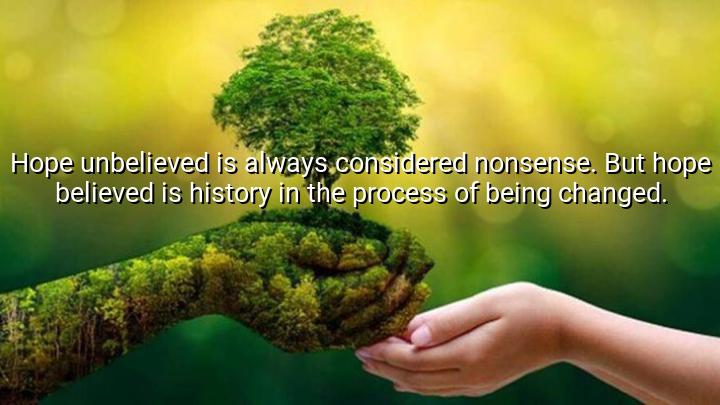




Jim Wallis’s quote—“Hope unbelieved is always considered nonsense. But hope believed is history in the process of being changed”—explores the transformative power of hope and the role it plays in shaping the future. Wallis suggests that when hope is not taken seriously or when it lacks faith, it may be dismissed as unrealistic or impractical (nonsense). However, when hope is genuinely believed in and acted upon, it becomes a powerful catalyst for change, capable of altering the course of history.
The origin of this quote comes from Wallis’s work as a Christian social activist and author, where he often emphasizes the importance of hope in the fight for justice and social change. As the founder of Sojourners, an organization focused on faith-based social justice, Wallis’s quote reflects his belief that hope, when grounded in action, is a force that can inspire movements and create real change in society. He underscores that hope is not just an abstract feeling but something that drives concrete action to challenge the status quo.
By contrasting hope as something that can be dismissed with hope that inspires action, Wallis highlights the difference between passive wishful thinking and active, transformative belief. Hope believed is not merely wishful; it becomes a driving force, an agent of change that can rewrite history. This perspective encourages people to have faith in the possibility of a better future and to take steps toward creating it, no matter how daunting the challenges may seem.
Ultimately, Wallis’s quote serves as a call to recognize the potential of hope in shaping the future. Hope believed is not just an emotional state but a dynamic force that has the power to influence history and change the world. This belief in hope as a transformative tool empowers individuals and communities to challenge injustice, fight for equality, and work toward a better tomorrow.

AAdministratorAdministrator
Welcome, honored guests. Please leave a comment, we will respond soon