

The great paradox of the 21st century is that, in this age of powerful technology, the biggest problems we face internationally are problems of the human soul.
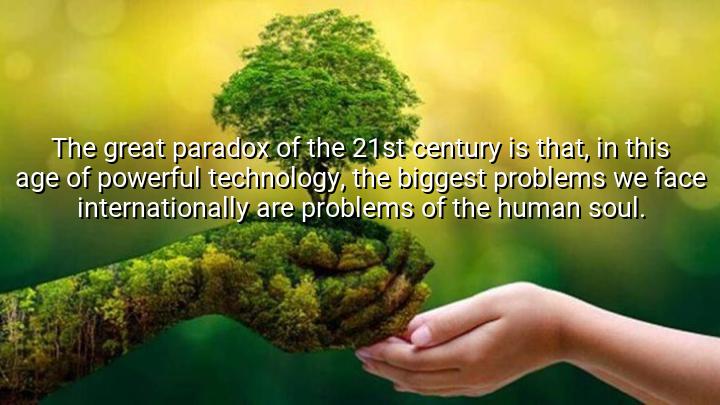




In this quote, Ralph Peters reflects on the paradox of the 21st century, where despite significant advancements in technology, the most pressing issues we face globally are not related to material progress or technological innovation but to deeper human concerns—specifically, the soul. Peters highlights that while we live in an era of tremendous technological power, the root causes of many of the world's problems are still fundamentally human in nature, involving issues like values, ethics, and emotional well-being.
Peters' statement emphasizes the idea that, despite technological breakthroughs in fields such as communication, medicine, and military advancements, human nature remains the key challenge in addressing global issues. Problems such as conflict, inequality, and political corruption are driven by human emotions, prejudices, and desires. These issues stem from the soul—the internal forces of belief, greed, and hatred—that drive decisions, policies, and actions on the world stage.
The quote also implies that while technology can provide solutions or alleviate certain problems, it cannot address the moral and spiritual issues that underlie much of human conflict. Technological progress may bring us closer together or help solve some of our material problems, but it cannot eliminate the deeper struggles related to human conscience and purpose. Peters’ insight urges us to recognize that the greatest challenges of modern times require addressing the complexities of the human spirit, not just technological fixes.
Ultimately, Ralph Peters's quote calls for a reflection on the human condition in the context of modern technology. It suggests that no matter how advanced our world becomes, the fundamental issues of the soul—such as compassion, ethics, and peace—remain the key to solving the deeper crises facing humanity. This paradox invites us to reconsider how we approach both technology and human relations in order to create a more harmonious future.

LNLoc Nguyen
I love how this quote flips the narrative. We often praise the 21st century for its innovation, but this calls out the emotional and spiritual void behind the screen. Could this be why so many people today feel a lack of meaning or purpose despite having so many conveniences? What kind of leadership or philosophy can help us fill that void responsibly and compassionately?
MBMr Bi
This quote feels incredibly timely. We’re seeing global crises—climate change denial, misinformation, authoritarianism—that aren’t really technological in nature. They're rooted in human behavior, fear, and a lack of empathy. Why is it that the more connected we become, the more we seem to struggle with basic humanity? It’s frustrating how few global efforts there are to treat these as priority issues.
TNThu Nguyen
What I find most haunting here is the implication that no amount of innovation can substitute for self-awareness and compassion. It feels like a warning—that unless we address things like fear, ego, and divisiveness, our most advanced technologies might only amplify our flaws. Are we investing enough energy in developing ethics alongside our inventions? Who’s responsible for ensuring we do?
BNBui Bao Ngoc
It’s such an unsettling truth. For all the global advancements—AI, space travel, medical breakthroughs—we still can’t seem to address the deep-rooted issues like hatred, greed, or intolerance. Why is it that emotional intelligence and empathy haven’t evolved at the same pace? Maybe the tools to solve these 'soul problems' aren't technological at all. Could education systems refocus on character development instead of just test scores?
THDao Thu Hien
This quote really makes me wonder—are we so focused on building smarter machines that we've forgotten how to nurture wiser humans? We have instant access to information and yet seem more disconnected, anxious, and divided than ever. Is it possible that technology is outpacing our moral and emotional development? What would it take to realign our inner growth with our external progress?