

Each day, each one of us chooses not to do many things that would be legal but offensive to those around us.
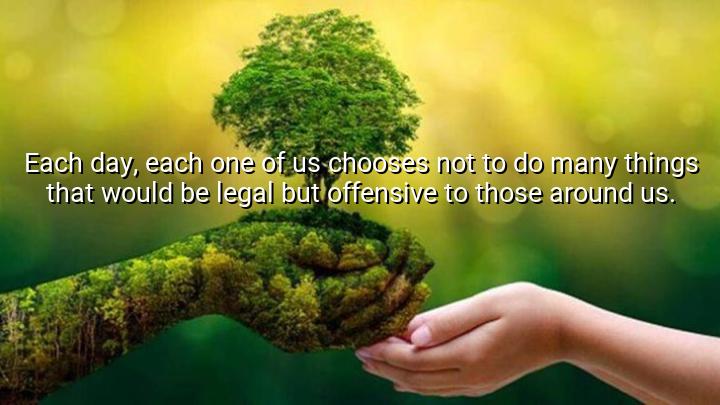




Ralph Peters' quote delves into the complex relationship between legality and morality. He suggests that, while individuals may have the legal right to do many things, they often choose not to because those actions may be offensive or hurtful to others. The quote highlights the distinction between what is legal and what is socially acceptable, emphasizing that the law does not always dictate our ethical choices.
Peters is making the point that society relies on individuals' sense of decency and respect for others to maintain harmony, even when no legal restrictions are in place. Just because something is permitted by law does not necessarily mean it is the right or respectful course of action. This idea challenges the assumption that legal rights always align with what is morally or socially responsible.
The origin of the quote can be traced to Peters' broader focus on cultural and ethical issues. As an author, military strategist, and commentator, he often discusses themes related to individual responsibility and societal norms. His experiences and perspectives in these areas likely influenced this quote, which reflects his belief that true civility goes beyond mere adherence to the law.
Ultimately, Peters is urging people to recognize the responsibility they have toward others, suggesting that we should make decisions based on more than just legality. Our actions should also take into account the potential impact on those around us, promoting a society grounded in mutual respect and understanding.

AAdministratorAdministrator
Welcome, honored guests. Please leave a comment, we will respond soon