

Ethics is knowing the difference between what you have a right to do and what is right to do.
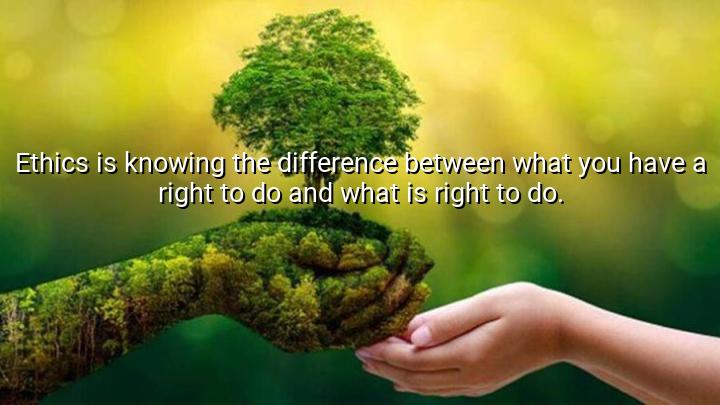




Potter Stewart’s quote highlights the distinction between legal rights and moral responsibilities. He emphasizes that ethics is not just about knowing what you are legally allowed to do, but also understanding what is the right or just thing to do. This distinction is important because legal rights are often governed by rules and regulations, while ethical behavior is determined by personal values, societal norms, and a sense of justice. Stewart suggests that simply because something is legal doesn’t mean it is morally or ethically right.
The quote also implies that ethical decision-making requires a level of consciousness and reflection. It's not enough to act based on one’s legal entitlement; true ethical behavior comes from being aware of the impact of one’s actions on others and understanding the broader implications of those actions in terms of what is just, fair, and respectful. By emphasizing the difference between right and legal, Stewart calls for a more thoughtful and nuanced approach to morality.
Stewart, a former Associate Justice of the U.S. Supreme Court, was known for his thoughtful and principled approach to legal interpretation. His work often involved balancing the letter of the law with broader principles of justice. This quote reflects his belief that the law alone is insufficient for guiding human behavior—true ethics must be informed by a deeper sense of right and wrong, not just what one is permitted to do under the law.
In summary, Stewart’s quote defines ethics as the awareness of the difference between what is legally permissible and what is morally right. It calls for individuals to act with a sense of responsibility and integrity, beyond simply adhering to legal rights. The quote encourages a deeper, more thoughtful approach to decision-making, rooted in personal and societal values.

AAdministratorAdministrator
Welcome, honored guests. Please leave a comment, we will respond soon