

The failure to read good books both enfeebles the vision and strengthens our most fatal tendency - the belief that the here and now is all there is.
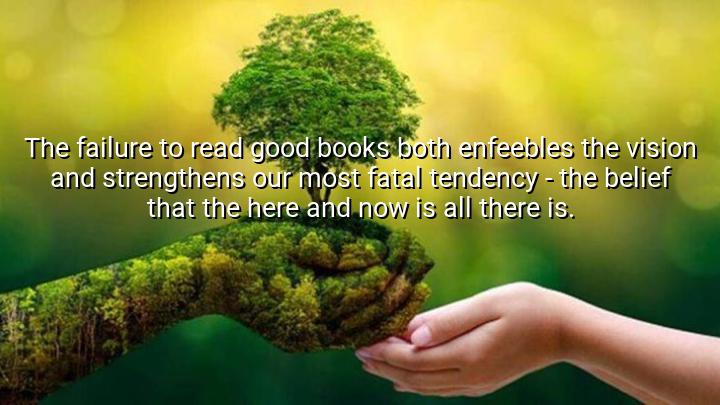




In this quote, Allan Bloom argues that the failure to read good books has significant consequences for both our intellectual and spiritual well-being. He suggests that by not engaging with the wisdom found in great literature, we enfeeble the vision—that is, we limit our ability to see beyond our immediate surroundings and gain a broader understanding of life. Good books open our minds to new perspectives, ideas, and histories, which in turn deepen our insight into the world and humanity.
Bloom also highlights that this failure strengthens what he considers one of humanity’s most fatal tendencies: the belief that the here and now—the present moment—is all that matters. Without the enriching influence of literature, we can become trapped in a narrow, limited view of existence, focusing solely on immediate concerns without considering the larger historical, philosophical, or moral dimensions of life. In other words, we risk becoming myopic, unable to reflect on the bigger picture or appreciate the depth of human experience.
The quote reflects Bloom’s belief in the transformative power of literature to expand our understanding and challenge our assumptions. By reading, especially classic books, we not only gain knowledge but also develop a more expansive worldview. Literature encourages us to think about eternal truths, to reflect on the past, and to consider how our actions today affect the future.
Ultimately, Bloom’s message is a call to reconnect with the timeless value of reading and its capacity to foster deeper thinking and reflection. He warns against the dangers of focusing too heavily on the present moment and advocates for the pursuit of knowledge that transcends the immediate, encouraging us to read good books in order to enrich our lives and broaden our minds.

AAdministratorAdministrator
Welcome, honored guests. Please leave a comment, we will respond soon