

Shakespeare is practically our only link with the classic and the past. The future of education has much to do with whether we will be able to cling to him or not.
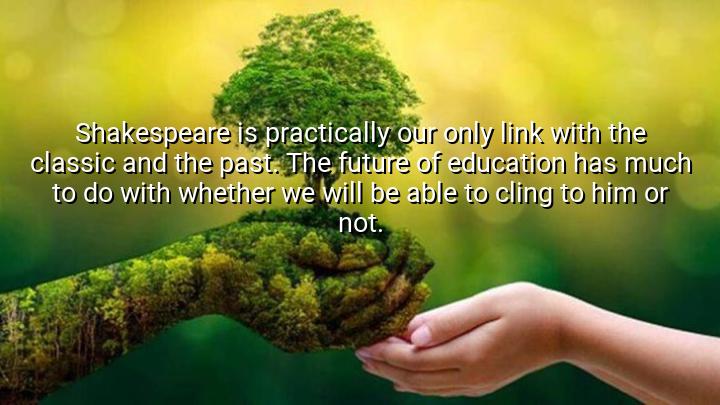




The quote by Allan Bloom, “Shakespeare is practically our only link with the classic and the past. The future of education has much to do with whether we will be able to cling to him or not,” emphasizes the enduring importance of Shakespeare as a cultural and educational touchstone. Bloom suggests that Shakespeare’s works serve as a critical connection to the literary, philosophical, and moral traditions of the past, offering insight into human nature and society that remains relevant today. The survival and influence of classical knowledge in education, he argues, depend on preserving engagement with these timeless works.
Allan Bloom, a 20th-century American philosopher and educator, was known for his writings on higher education, culture, and the humanities. In this quote, he underscores the pivotal role of Shakespeare in shaping critical thinking, moral reflection, and literary appreciation. Bloom believed that exposure to classical texts is essential for a well-rounded education, providing students with a foundation for understanding enduring questions about human behavior and social life.
The origin of this quote lies in Bloom’s advocacy for the liberal arts and his concern over the declining emphasis on classical literature in modern curricula. By highlighting Shakespeare as a bridge to the past, he warns that neglecting these cultural and literary touchstones threatens the depth and quality of future education. Bloom’s argument reflects his belief in the transformative power of engaging with great works to cultivate wisdom and insight.
Ultimately, Bloom’s insight reminds us that education is not only about acquiring contemporary knowledge but also about maintaining a connection with the classics. The quote underscores the importance of preserving access to Shakespeare and similar works, as they provide both continuity with the past and guidance for navigating the challenges of the future. Engaging with these texts is essential for fostering critical thought and cultural literacy.

AAdministratorAdministrator
Welcome, honored guests. Please leave a comment, we will respond soon