

Modern education has devoted itself to the teaching of impudence, and then we complain that we can no longer control our mobs.
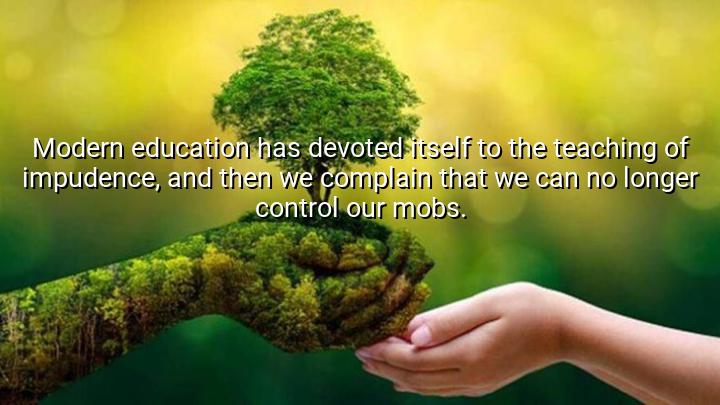




The quote “Modern education has devoted itself to the teaching of impudence, and then we complain that we can no longer control our mobs.” by John Ruskin is a sharp critique of the direction of modern education in his time. Ruskin suggests that instead of cultivating discipline, morality, and respect, education has encouraged impudence—a kind of arrogance or disrespect for authority. As a result, society suffers the consequences, facing unruly behavior and unrest, symbolized here by uncontrollable mobs.
The origin of this statement can be traced to Ruskin’s role as a 19th-century English art critic, social thinker, and moral philosopher. He often used his writings and lectures to critique not only art and architecture but also the broader values of industrial society. Ruskin believed that education should shape character and instill virtues necessary for a stable, just society. His frustration reflects the cultural tensions of the Victorian era, where industrialization and social change challenged traditional norms of authority and morality.
The meaning of the quote lies in its warning about the consequences of neglecting moral and ethical formation in education. Ruskin points out that if students are trained to question authority without also being taught responsibility, humility, and respect, society will inevitably face disorder. His criticism highlights the gap between intellectual advancement and moral guidance, suggesting that true education must balance freedom of thought with civic responsibility.
Ultimately, Ruskin’s words are both a critique and a caution. He urges society to reconsider the goals of modern education, arguing that knowledge without virtue leads to chaos rather than progress. By linking impudence in the classroom to mobs in the streets, he underscores the far-reaching impact of education on social stability and cultural integrity.

AAdministratorAdministrator
Welcome, honored guests. Please leave a comment, we will respond soon