

Once my family was taken, I became fully aware that my community matters less to some people. That we are treated differently because of the color of our skin or where our parents were born.
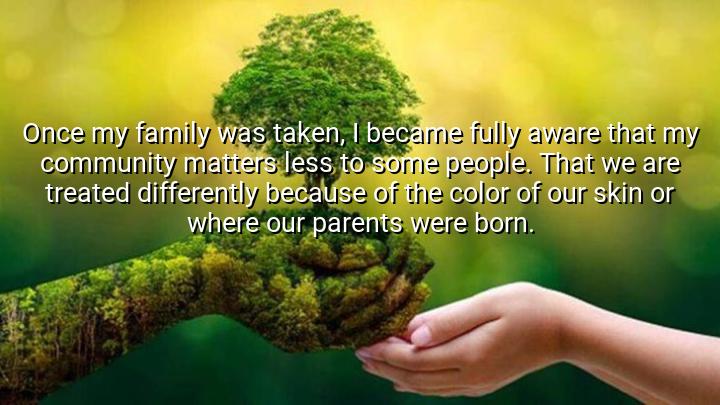




The quote “Once my family was taken, I became fully aware that my community matters less to some people. That we are treated differently because of the color of our skin or where our parents were born.” by Diane Guerrero reflects the pain of family separation and the harsh reality of discrimination. Guerrero shares that it was only after the traumatic experience of her family being taken away—due to immigration enforcement—that she fully recognized systemic inequality. Her words highlight how race, ethnicity, and immigration status can determine how communities are valued or devalued in society.
The origin of this quote comes from Diane Guerrero’s personal story as the daughter of undocumented Colombian immigrants in the United States. When she was 14 years old, her parents were deported, leaving her to navigate life alone in Boston. She later recounted this experience in her memoir, “In the Country We Love: My Family Divided,” using her platform as an actress and activist to shed light on the human impact of U.S. immigration policies. This quote captures the moment of awareness when personal loss intersected with systemic injustice, making discrimination no longer an abstract concept but a lived experience.
This quote also underscores the intersection of identity and social inequality. Guerrero’s reflection shows how skin color, immigrant background, and nationality can affect how communities are treated, shaping both personal identity and social consciousness. Her family’s separation served as a turning point, deepening her understanding of marginalization and inspiring her to advocate for immigrant rights and racial justice.
Ultimately, Diane Guerrero’s words are a testament to resilience and awakening. They reveal how personal tragedy can expose the inequities embedded in society, motivating individuals to speak out and fight for change. Her story connects family, identity, and activism, reminding us that discrimination is not just a policy issue—it is a deeply human experience that leaves lasting emotional and social scars.

AAdministratorAdministrator
Welcome, honored guests. Please leave a comment, we will respond soon