

My family and I survived Hurricane Katrina in 2005; we left my grandmother's flooding house, were refused shelter by a white family, and took refuge in trucks in an open field during a Category Five hurricane. I saw an entire town demolished, people fighting over water, breaking open caskets searching for something that could help them survive.
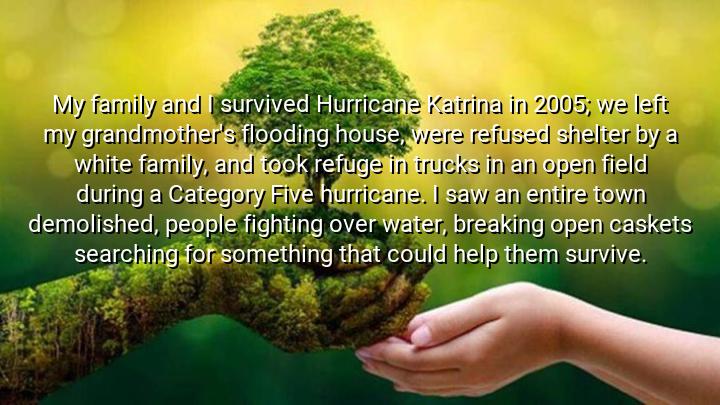




The quote “My family and I survived Hurricane Katrina in 2005; we left my grandmother's flooding house, were refused shelter by a white family, and took refuge in trucks in an open field during a Category Five hurricane. I saw an entire town demolished, people fighting over water, breaking open caskets searching for something that could help them survive” by Jesmyn Ward is a powerful testimony of survival, trauma, and social inequality. Jesmyn Ward, an acclaimed author and National Book Award winner, recounts her personal experience during Hurricane Katrina, one of the deadliest natural disasters in U.S. history. Her vivid description highlights the physical danger, human desperation, and harsh realities of living through a catastrophic storm.
The origin of this quote comes from Ward’s firsthand experience in 2005, which deeply shaped both her life and literary voice. Her family’s evacuation from a flooding home, their rejection by a white family, and their improvised refuge in trucks during a Category Five hurricane underscore the intersection of natural disaster and social inequity. These events would later inspire her writing, particularly her memoir “Men We Reaped” and novels like “Salvage the Bones,” which explore race, poverty, and survival in the rural South.
This quote also sheds light on human vulnerability and systemic disparities. Ward’s mention of being refused shelter and witnessing people fighting for water or even breaking open caskets speaks to the desperation and neglect faced by many Black families during the Katrina crisis. It reflects the inequitable response to the disaster, which left marginalized communities isolated and struggling while revealing deep racial and economic divides in the United States.
Ultimately, Ward’s words are both personal and universal. They memorialize the suffering and resilience of her family and community while condemning the social failures that exacerbated the tragedy. Her harrowing imagery transforms the horrors of Hurricane Katrina into a lasting literary testimony, ensuring that the human cost of the disaster is neither forgotten nor ignored.

AAdministratorAdministrator
Welcome, honored guests. Please leave a comment, we will respond soon