

Mindfulness can help people of any age. That's because we become what we think.
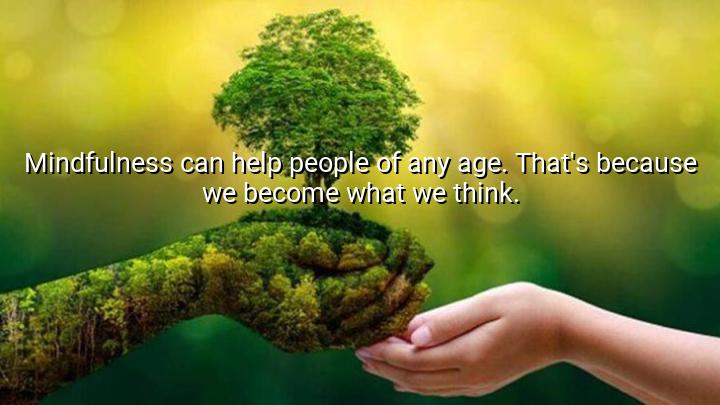




In this quote, Goldie Hawn emphasizes the universal benefits of mindfulness, suggesting that it can help people of any age. She highlights the power of our thoughts and how they directly shape our reality. The core message is that by practicing mindfulness, individuals can become more aware of their thoughts and manage them in a way that fosters positive outcomes, improving overall well-being and mental clarity.
Hawn's statement is rooted in the belief that thoughts are powerful and that we often become the sum of our mental patterns. When we focus on positive and present thoughts, we cultivate a sense of peace, balance, and emotional resilience. Conversely, negative thinking can lead to stress, anxiety, and unhappiness. Mindfulness, then, is a practice that helps individuals break free from the cycle of negative thinking, enabling them to live in the moment and foster a healthier mindset.
The origin of this perspective comes from Hawn’s dedication to promoting mental health and well-being. She is known for her work in advocating for mindfulness, particularly through her Goldie Hawn Foundation, which focuses on promoting emotional and psychological well-being in children. Her commitment to mindfulness and its benefits is reflected in her personal life and career, which have included exploring ways to support people in developing emotional intelligence and mindfulness practices.
Ultimately, Hawn’s quote reminds us of the profound connection between our minds and our experiences. It underscores the idea that through practices like mindfulness, we have the power to change our mental landscapes, leading to more fulfilling and joyful lives.

DNDuong Nguyen
This quote inspires reflection on how self-awareness influences personal growth. It also makes me think about cultural differences in embracing mindfulness. How do various traditions approach the connection between thought and being? Could integrating mindfulness with other cultural practices create more accessible mental health tools worldwide?
NNKim Ngan Nguyen
Goldie Hawn’s words remind me that mindfulness is not just for adults or spiritual seekers but for everyone. However, it also prompts me to ask: are there limits to mindfulness? Can focusing too much on thoughts sometimes lead to overthinking or anxiety? How do practitioners balance awareness without getting caught in negative loops?
NNNga Nguyen
This statement suggests a powerful idea: that mental habits shape who we become. It makes me curious about the role of early education in teaching mindfulness. Should schools incorporate mindfulness training to help young people develop healthier thought patterns from the start? What impact could this have on future generations?
TNTri Thinh Nguyen
I appreciate how this quote connects thoughts directly to identity and well-being. It raises questions about how much control we truly have over our thoughts and whether mindfulness can help us reshape negative thinking patterns. What scientific evidence supports this claim, and how can people integrate mindfulness into busy, stressful lives?
NNTran Le Nhu Ngoc
Goldie Hawn’s quote emphasizes the universal benefits of mindfulness, which I find encouraging. It makes me wonder how mindfulness practices can be adapted for different age groups, from children to seniors. Are there particular techniques that work better depending on one’s stage in life? Also, how do we overcome skepticism about mindfulness, especially among those who view it as just a trend?