

Buddhism is really, one of its main practices is understanding and experiencing compassion, and how that ultimately is a road to happiness.
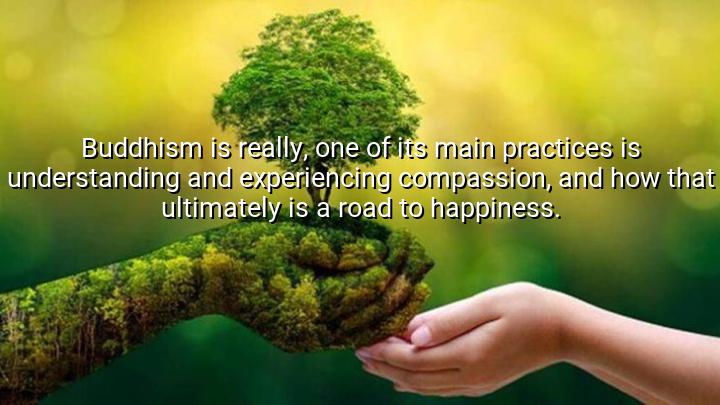




In this quote, Goldie Hawn reflects on one of the core principles of Buddhism: the practice of compassion. She explains that a central aspect of Buddhism is not only understanding the concept of compassion but also experiencing it in a deep, personal way. Compassion, in this context, is seen as a transformative force that leads to happiness. By cultivating compassion for others and oneself, individuals can achieve a state of inner peace and fulfillment.
Hawn emphasizes that compassion is more than just a passive feeling; it is an active practice that involves empathy, kindness, and a genuine concern for the well-being of others. According to Buddhist teachings, embracing compassion allows individuals to transcend negative emotions such as anger, fear, or hatred, which are barriers to happiness. By practicing compassion, a person can foster a deeper connection with others, creating a more harmonious and loving environment.
The origin of this quote lies in Hawn's own exploration of Buddhist philosophy and its connection to personal well-being. Hawn has been involved in various spiritual and wellness practices, often emphasizing the importance of emotional and mental health. This quote reflects her belief that compassion is not only an essential spiritual practice but also a powerful tool for achieving long-lasting happiness and contentment.
Ultimately, Hawn’s words highlight the significance of compassion as a pathway to a more meaningful and happy life. Her quote serves as a reminder that happiness is not solely found through external success or material wealth but through the cultivation of a compassionate heart. This perspective encourages individuals to focus on empathy and kindness as key elements in their pursuit of well-being.

AAdministratorAdministrator
Welcome, honored guests. Please leave a comment, we will respond soon