

Men are freest when they are most unconscious of freedom. The shout is a rattling of chains, always was.
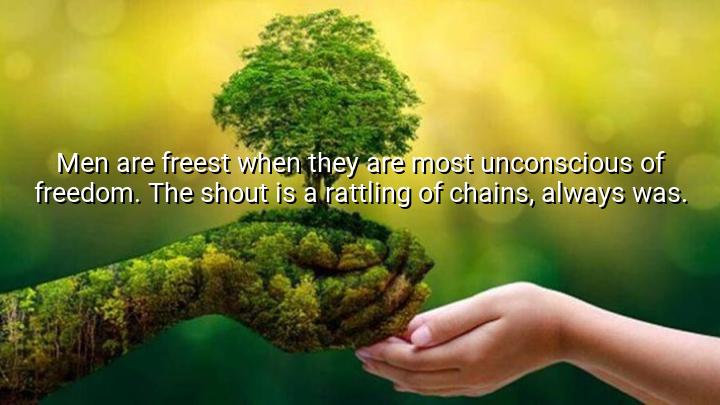




In this quote, D. H. Lawrence explores the paradoxical nature of freedom. He suggests that people are often most free when they are not consciously focused on their freedom, implying that true liberty comes from living naturally without overthinking or forcing it. When individuals are unconscious of freedom, they are not preoccupied with the constraints or limitations placed on them by society or others. In other words, true freedom is felt when it is a natural state of being, not when it is actively sought or celebrated.
Lawrence also contrasts this idea with the shout, which he describes as a rattling of chains. The "shout" refers to loud calls for freedom or revolution, which, according to Lawrence, are often just symptoms of deeper oppression. The noise of protest or the visible calls for change may seem like expressions of freedom, but Lawrence argues that they often reveal the very chains of restriction that people are still bound by. The shout is not freedom itself but a reaction to the lack of it, drawing attention to the injustice or constraint people face.
The phrase "always was" suggests that this dynamic has existed throughout history, indicating that calls for freedom have often come from people who feel enslaved or controlled. Lawrence's point is that protests or outcries for freedom might be driven by a sense of lack or oppression, but true freedom comes from within and cannot be achieved solely through external noise or demands.
Ultimately, Lawrence’s quote critiques the idea that shouting or demanding freedom is the same as achieving it. Freedom, in his view, is a state of being that is most deeply experienced when one is unaware of it, in a natural and unforced manner. The shout, or the outward expression of the desire for freedom, is a reflection of the very oppression people are trying to escape, suggesting that real freedom is about transcending the need for such expressions and living in harmony with the essence of being free.

AAdministratorAdministrator
Welcome, honored guests. Please leave a comment, we will respond soon