

I can never decide whether my dreams are the result of my thoughts, or my thoughts the result of my dreams.
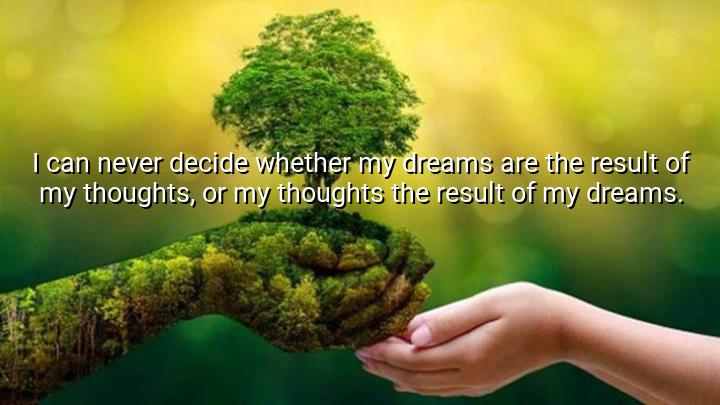




D. H. Lawrence’s quote reflects on the complex relationship between dreams and conscious thought. He explores the cyclical nature of how our mind operates, questioning whether our dreams are shaped by our waking thoughts, or if, conversely, our thoughts are influenced by the dreams we experience. This internal tug-of-war reveals the mystery of the subconscious mind and how it intertwines with our waking life. Lawrence acknowledges the fluid and often indistinguishable line between these two realms, suggesting that the boundaries between the two are not as clear-cut as we might think.
The quote delves into the concept of self-reflection and the role of the subconscious in shaping both our dreams and thoughts. It suggests that our mind is constantly at work, processing experiences and emotions, and that both our conscious and unconscious states are interconnected. This idea resonates with psychological theories, particularly those of Sigmund Freud and Carl Jung, who explored the significance of dreams as a reflection of our deeper psyche and inner conflicts.
The origin of the quote lies in Lawrence’s broader body of work, which often explores the tension between the conscious and unconscious mind, as well as the ways in which humans navigate self-awareness, desire, and emotion. As a novelist, poet, and essayist, Lawrence was deeply interested in how our inner thoughts and feelings shape our outer reality, often touching on themes of sexuality, identity, and the complexities of human nature.
Ultimately, Lawrence’s quote invites us to reflect on the fluidity of our mental processes, urging us to consider how our dreams and thoughts might not be as separate as we think. It challenges the notion that we have complete control over our mind, suggesting that our thoughts and dreams are part of a continuous, interwoven process that reflects the depth and complexity of the human experience.

AAdministratorAdministrator
Welcome, honored guests. Please leave a comment, we will respond soon