

It is not what a lawyer tells me I may do; but what humanity, reason, and justice tell me I ought to do.
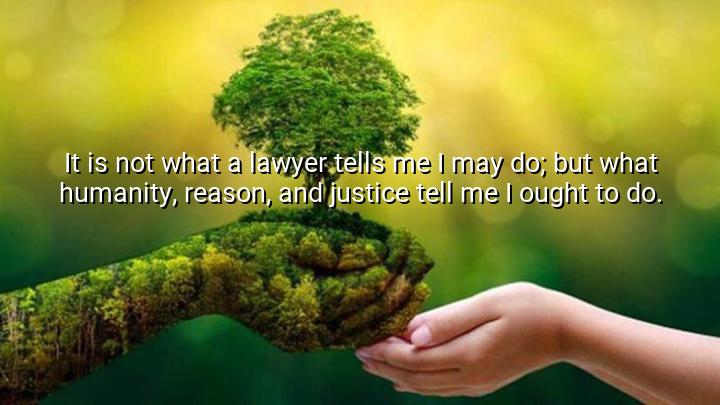




In this quote, Edmund Burke emphasizes the importance of following humanity, reason, and justice over merely adhering to what the lawyer or legal system dictates. Burke argues that moral decisions should be based on ethical principles and the greater good, rather than simply obeying the law without questioning its fairness. He suggests that justice transcends legal technicalities and that an individual's actions should be guided by a higher sense of what is right, even when the law might be flawed.
Burke’s perspective reflects his philosophical views on natural law and moral responsibility. He believed that true justice is rooted in moral reasoning and that laws should align with the principles of justice and human dignity. His statement implies that blind obedience to the law can sometimes lead to injustice and that it is more important to act according to universal values that protect human rights and welfare.
The origin of this quote comes from Burke's writings during the late 18th century, a time of political upheaval in Europe. Burke was an influential philosopher and politician, known for his critiques of the French Revolution and his advocacy for gradual political change rather than radical shifts. He believed in the importance of preserving tradition and reason in governance, emphasizing that moral actions should precede legal considerations in matters of justice.
Ultimately, Burke’s quote advocates for ethical decision-making that is guided by reason and a sense of moral obligation, rather than a strict interpretation of law. His message underscores the idea that justice is not always synonymous with legality and that individuals have a responsibility to act according to what is truly right and just in the broader context of human welfare.

AAdministratorAdministrator
Welcome, honored guests. Please leave a comment, we will respond soon