

It is not by the gray of the hair that one knows the age of the heart.
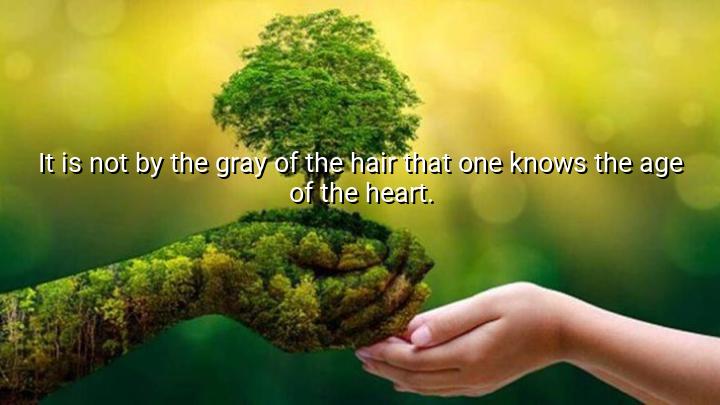




Edward G. Bulwer-Lytton’s quote, "It is not by the gray of the hair that one knows the age of the heart," emphasizes that age should not be determined solely by external appearances, particularly physical signs of aging like gray hair. Instead, Bulwer-Lytton suggests that the true measure of a person’s vitality, spirit, and emotional life lies in their heart, or inner character, which may remain youthful and vibrant regardless of their physical age.
The quote reflects a deeper understanding of aging, arguing that physical changes, such as the graying of hair, do not necessarily correlate with a person’s emotional or psychological age. Heart here symbolizes a person’s emotional resilience, passion, and capacity for joy, implying that one’s inner life can remain youthful even when the body shows signs of age. This message encourages us to focus on the qualities that truly define our youth—like enthusiasm, curiosity, and compassion—rather than merely how we look.
Edward G. Bulwer-Lytton, a 19th-century English writer and politician, was known for his works on human emotions and social relationships. His quote is part of his larger exploration of the human condition, where he often delved into themes of character, emotion, and the contrasts between outward appearances and inner truths. His writing often sought to remind readers that the spirit is a more meaningful measure of one’s life than superficial attributes.
In essence, Bulwer-Lytton’s quote encourages a shift in how we define age and youth. It suggests that, rather than focusing on the physical aspects of aging, we should recognize that the heart—representing emotional vitality and inner strength—can remain timeless. This perspective invites a more holistic and positive view of growing older, valuing the richness of experience and the potential for continued emotional growth.

BLHa Phuoc Bao Long
This saying encourages a more compassionate and holistic view of aging. It suggests that a person’s true essence isn’t visible in their hair color but in their feelings, dreams, and capacity for love. How can this idea help combat ageism and promote deeper understanding across generations? It’s a hopeful reminder that the heart’s vitality transcends time.
BCBabi Chicken
I’m curious about how this quote applies to different life stages. Can younger people have ‘old hearts’ full of wisdom, and older people maintain youthful spirits? How do personal hardships or joys affect the ‘age’ of the heart? This thought-provoking quote invites us to consider the complex interplay between experience, emotion, and physical aging.
NLng la
This quote makes me question how modern culture equates aging with decline. Is it possible that the heart’s ‘age’ is actually determined by mindset, experiences, and attitudes? How might this perspective influence how we treat ourselves and others as we age? It feels like an invitation to focus on emotional health and vitality rather than physical markers alone.
Hhungkahoot733@
Reading this, I think about how important it is to value inner qualities over outward signs. But how often do we judge people’s energy or wisdom based on how old they look? Could this lead to misunderstandings or missed connections? The quote encourages us to look beyond appearances and appreciate the timelessness of the human spirit regardless of chronological age.
TVTrang Vuong
I find this statement comforting because it challenges stereotypes about aging. It suggests that emotional youthfulness and resilience aren’t bound by physical appearance. But how do we nurture a ‘young heart’ as we grow older? Are there cultural differences in how people perceive the connection between age and the heart’s vitality? This quote inspires reflection on what it means to age gracefully and authentically.