

I'm Colombian. My family all have different complexions; some are people of color. I've been called every name by white people, been mocked for speaking in Spanish by white people.
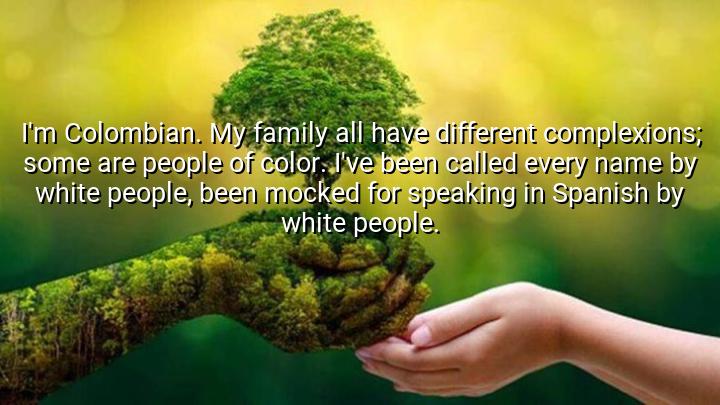




The quote “I'm Colombian. My family all have different complexions; some are people of color. I've been called every name by white people, been mocked for speaking in Spanish by white people.” by Kali Uchis reflects the challenges of racial and cultural identity faced by many people of Latin American descent. Uchis highlights the diversity within her own family, illustrating how complexions and identities vary even within a single ethnic group. Her experience of being targeted with racial slurs and mocked for her language exposes the prevalence of discrimination and prejudice faced by people of color, especially in predominantly white societies.
The origin of this quote lies in Kali Uchis’s personal experiences as a Colombian-American singer and artist navigating life between two cultures. Growing up as a bilingual person of color, she has spoken openly about facing racism and xenophobia, particularly related to her ethnic background and language. This quote sheds light on the microaggressions and overt racism that minorities often endure, emphasizing the ongoing struggles around identity, acceptance, and respect.
This quote also touches on the broader themes of intersectionality and cultural pride. Uchis’s acknowledgment of her family’s racial diversity challenges simplistic or stereotypical notions about what it means to be Colombian or Latinx. Her words reveal the complexity of identity and the importance of embracing heritage, even when it means confronting prejudice and exclusion. By sharing her story, she gives voice to others who face similar challenges.
Ultimately, Kali Uchis’s statement is a powerful testimony to resilience and authenticity. It highlights the need for greater awareness and respect for cultural and racial diversity, and calls out the hurt caused by discrimination and linguistic mockery. Her words encourage empathy and understanding, while affirming the value of embracing one’s true identity despite societal pressures.

AAdministratorAdministrator
Welcome, honored guests. Please leave a comment, we will respond soon