

If a person cannot love a plant after he has pruned it, then he has either done a poor job or is devoid of emotion.
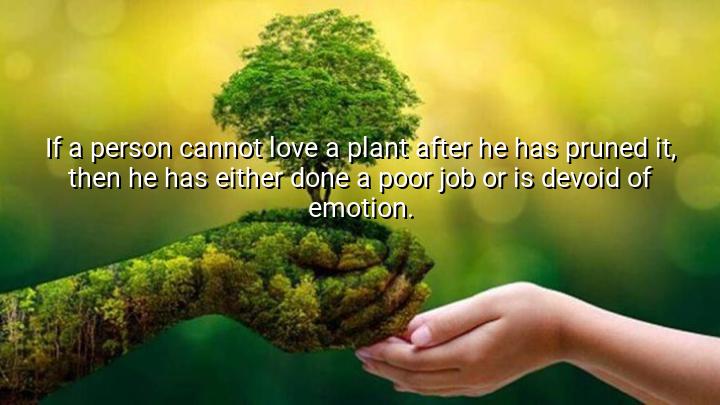




The quote "If a person cannot love a plant after he has pruned it, then he has either done a poor job or is devoid of emotion" by Liberty Hyde Bailey emphasizes the emotional connection between humans and plants, especially during the act of pruning. Bailey suggests that pruning, which involves trimming and shaping a plant to encourage its growth, is not just a mechanical task but one that requires attention, care, and affection. After nurturing a plant through pruning, one should feel a sense of pride and connection, as the act itself is a demonstration of the gardener’s commitment to the plant’s well-being.
Bailey’s words also imply that there is an inherent gratitude and love that comes from caring for plants. When someone prunes a plant properly, they are participating in the plant’s development, shaping it to flourish in a healthier and more productive way. If someone cannot appreciate the result of their work, it may be a sign that they are not truly engaged in the process. The act of pruning, in this sense, is a metaphor for any task where care and effort lead to positive results, and the emotional response should reflect that effort.
Additionally, the quote speaks to the deeper psychological connection between humans and nature. Gardening, particularly tasks like pruning, allows people to bond with the living world around them. The gardener’s emotional response to a well-pruned plant indicates a sense of fulfillment and connection with nature. If this emotional response is absent, Bailey suggests that either the gardener has not put in the right effort or is lacking in the empathy that makes such a task meaningful.
Liberty Hyde Bailey was an American horticulturist and agricultural educator, known for his contributions to the study of plants and gardening. His belief in the emotional and therapeutic aspects of gardening is reflected in this quote, where he connects a gardener’s feelings of love and care with the success of their efforts. Bailey’s work emphasized not just the science of gardening but also the personal connection and joy that comes from working with plants.

AAdministratorAdministrator
Welcome, honored guests. Please leave a comment, we will respond soon