

Freedom is not procured by a full enjoyment of what is desired, but by controlling the desire.
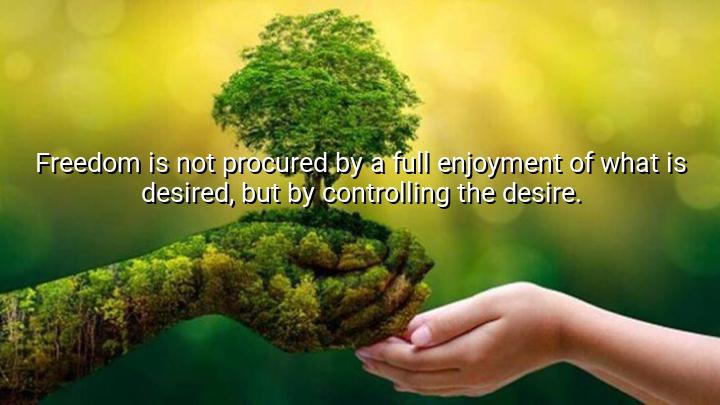




The quote by Epictetus offers a profound perspective on the nature of freedom. It suggests that true freedom does not come from constantly satisfying every desire or chasing after things that we want. Instead, freedom arises from the ability to control and manage our desires. Epictetus, a Stoic philosopher, believed that our thoughts and actions are within our control, but external circumstances and fleeting desires are not. Therefore, by mastering our desires, we attain a deeper sense of freedom.
The essence of this quote lies in the idea that uncontrolled desires can create dependence and lead to a lack of self-discipline. When we allow our desires to govern us, we become slaves to them, constantly seeking satisfaction without ever finding true peace. Epictetus teaches that self-control is the key to breaking free from this cycle, emphasizing that the discipline to limit our wants is what leads to true independence and serenity.
Moreover, the idea of freedom in this context aligns with Stoic philosophy, which encourages individuals to focus on what is within their power—their reactions, thoughts, and actions—while accepting what cannot be controlled. By controlling our desires, we no longer define ourselves by external circumstances, but instead, we define ourselves by our internal strength and wisdom. This freedom is not about indulgence but about inner peace and contentment.
Epictetus' philosophy reminds us that desire itself isn't inherently negative, but when left unchecked, it can lead to emotional turmoil and enslavement. True freedom comes when we can experience life without being dictated by every craving or fleeting want. In mastering our desires, we find peace and the ability to live authentically and freely.

AAdministratorAdministrator
Welcome, honored guests. Please leave a comment, we will respond soon