

For it pleased God, after he had made all things by the word of his power, to create man after his own image.
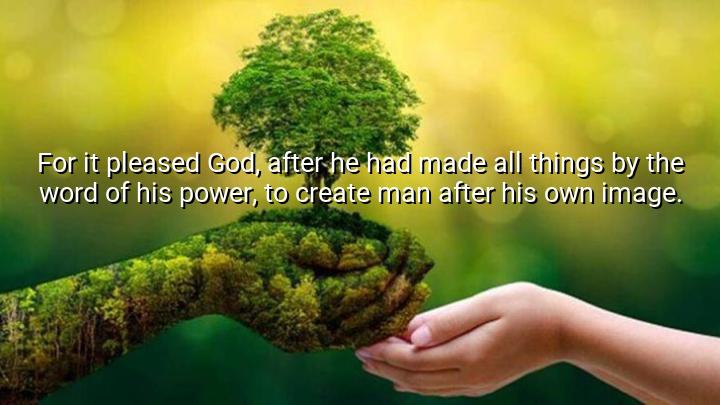




The quote "For it pleased God, after he had made all things by the word of his power, to create man after his own image" by George Whitefield reflects a profound theological idea central to Christian belief: that God created humanity in His likeness. Whitefield, a prominent 18th-century preacher and evangelist, is emphasizing that after God created the entire universe through His powerful word, He chose to create man in a special way, giving him the unique ability to reflect God’s image and nature. This suggests that human beings are distinct in creation, possessing a divine potential to mirror the goodness, intelligence, and purpose of God.
The origin of this quote lies in Whitefield's evangelical teachings, which were deeply rooted in Christian doctrine. He often preached about the greatness of God's creation and the special status of humanity within that creation. Whitefield, who played a key role in the Great Awakening, emphasized the importance of understanding humanity's relationship with God. According to Christian theology, the idea of being created in the image of God implies that humans have the ability to reflect God’s attributes, such as rationality, creativity, and moral capacity, and are called to live in accordance with His will.
In this context, Whitefield’s quote underscores the idea that God's creation of humanity was intentional and purposeful. It is a reminder that humans are not accidental or insignificant within the vastness of creation, but are endowed with a special dignity because they are created in God's image. This provides a foundation for understanding the inherent value and worth of every person, as well as the responsibility to live in a way that reflects God's character and goodness.
Ultimately, the quote calls believers to recognize the divine purpose in their lives and to live in a manner that reflects the image of God within them. By understanding that humans are created in God's image, people are encouraged to seek to align their actions, thoughts, and values with God's nature, striving to live with the love, compassion, and righteousness that characterize the divine.

AAdministratorAdministrator
Welcome, honored guests. Please leave a comment, we will respond soon