

Nothing is more generally known than our duties which belong to Christianity; and yet, how amazing is it, nothing is less practiced?
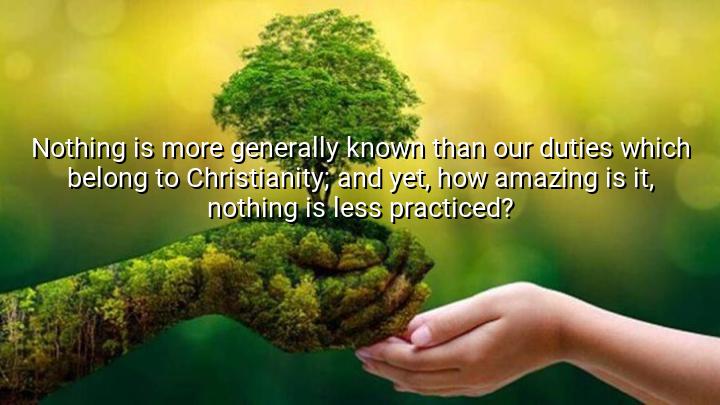




In this quote, George Whitefield reflects on the paradox of how well-known the duties associated with Christianity are, yet how rarely they are put into practice. He acknowledges that the teachings of Christianity—such as love, compassion, and service to others—are widely understood and discussed, but he points out that these principles are often neglected in everyday life. Whitefield is expressing his disappointment and concern that the knowledge of Christian values does not always translate into action.
Whitefield’s observation speaks to the gap between belief and behavior, emphasizing that just because something is well-known or universally accepted does not necessarily mean it is being followed. He is urging people to not only know their Christian duties but to actively live them out in their daily lives. The quote suggests that understanding and practice should go hand in hand, yet in many cases, they remain disconnected.
By using the word "amazing," Whitefield emphasizes the irony of the situation. It is surprising and somewhat disheartening that despite the widespread awareness of Christian teachings, they are not more deeply integrated into people’s actions. This highlights the human tendency to overlook moral duties even when they are well known, which Whitefield finds both perplexing and troubling.
Ultimately, Whitefield's quote calls for greater reflection and commitment to the principles of Christianity. It serves as a reminder to not only be aware of one’s religious responsibilities but also to actively live by them, bridging the gap between knowledge and action. Through this reflection, he challenges individuals to be more authentic in their faith and practice.

Jjeep
I respect Whitefield’s bluntness here. It challenges me to reflect on my own life—how often do I align my actions with what I claim to believe? It’s easy to identify with a faith tradition, but living it out takes humility and consistency. Do modern Christians need more spiritual discipline, or are we just too distracted by daily life to embody what we already know to be right?
NHNguyn Hoang
What’s really fascinating about this quote is how it highlights the irony in human behavior. We seem wired to know right from wrong, especially when it’s reinforced through religion, yet we often act in contradiction. Is it that the teachings are too idealistic for real life, or do we just lack accountability? I wonder what role community and leadership play in encouraging true practice of spiritual values.
PCphong chau
This makes me wonder if knowing our moral duties is enough to live a meaningful or ethical life. Is the issue that people lack the willpower, or is it that faith has become more performative than personal? I often hear people reference Christian principles, but when it comes to actual practice—like helping the poor or loving enemies—the follow-through is rare. Why is that disconnect so persistent?
VPHuynh Vinh Phat
Whitefield's observation seems timeless, and it still feels incredibly relevant today. I’m curious—do people struggle to practice Christian values because of personal shortcomings, or is it more about the systems and cultures that shape our daily lives? It’s frustrating to see how often love and humility are preached, yet ego and judgment dominate interactions, even among believers. How do we change that from within?
TMTrang Mai
I find this quote both powerful and convicting. It makes me question whether the modern church has become too focused on doctrine and appearance rather than real spiritual transformation. If we know what’s expected of us, what prevents us from living it out? Are we afraid of being inconvenienced or judged, or have we become desensitized to the real meaning behind these teachings?