

Family life itself, that safest, most traditional, most approved of female choices, is not a sanctuary: It is, perpetually, a dangerous place.
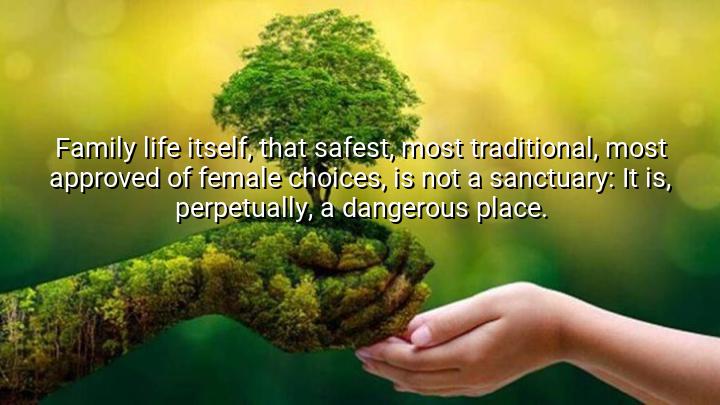




The quote "Family life itself, that safest, most traditional, most approved of female choices, is not a sanctuary: It is, perpetually, a dangerous place." by Margaret Drabble offers a critical and nuanced perspective on family life, particularly from a feminist viewpoint. Drabble challenges the conventional idea that family life is a safe haven or an inherently positive space for women. Instead, she suggests that family life can be fraught with danger, conflict, and emotional complexity. This quote highlights the realities that many women face within the family structure, including struggles for autonomy, power dynamics, and the pressures of traditional roles.
Margaret Drabble, a respected British novelist and critic, is known for exploring themes related to gender, identity, and social roles. Her quote reflects a broader critique of how society idealizes family life, often overlooking the difficulties and inequalities women may endure within it. Drabble’s words invite readers to reconsider the assumption that family life is automatically nurturing and protective, revealing its potential as a site of tension and challenge.
The origin of this quote lies in Drabble’s feminist literary work and social commentary, where she delves into the complexities of personal and social life for women. She brings attention to the emotional and psychological realities beneath the surface of traditional family roles, calling for greater awareness and dialogue about women’s experiences. The quote serves as a powerful reminder that family life is not always idyllic or safe, especially for women navigating societal expectations.
Ultimately, Drabble’s quote urges a deeper understanding of the dangers and difficulties present within family dynamics. It challenges the romanticized view of family as a sanctuary and calls for recognition of the real struggles women face. By doing so, it contributes to a more honest conversation about gender, power, and the lived realities of family life.

AAdministratorAdministrator
Welcome, honored guests. Please leave a comment, we will respond soon