

Do you know that charming part of our country which has been called the garden of France - that spot where, amid verdant plains watered by wide streams, one inhales the purest air of heaven?
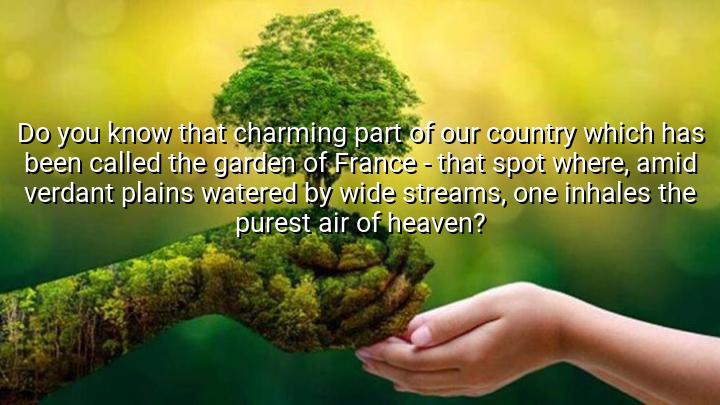




The quote by Alfred de Vigny, "Do you know that charming part of our country which has been called the garden of France - that spot where, amid verdant plains watered by wide streams, one inhales the purest air of heaven?" paints a vivid picture of a place rich in natural beauty and serenity. De Vigny is describing a region of France known for its lush, green landscapes, where the fertile plains are nourished by wide streams. The quote emphasizes the connection between nature and well-being, with the reference to "the purest air of heaven" suggesting the restorative and refreshing qualities of this idyllic environment.
De Vigny’s reference to the region as "the garden of France" evokes the idea of a land that is not only visually stunning but also spiritually uplifting. By calling it "charming," he implies that this place holds an almost magical quality, offering more than just a peaceful refuge but a source of inspiration and nourishment for the soul. The mention of verdant plains and pure air ties nature directly to health and vitality, highlighting how deeply human life is intertwined with the environment.
The imagery in the quote reflects de Vigny’s romanticized view of nature, a common theme in the Romantic movement. The beauty of the land and the refreshing air represent an idealized vision of nature as a place for restoration and a sanctuary from the stresses of daily life. The way he describes the landscape suggests that this area not only provides physical refreshment but also offers a deeper, spiritual rejuvenation.
The origin of this quote lies in Alfred de Vigny’s admiration for the natural world, which was a recurring theme in his works. As a poet and writer, he often explored the relationship between humans and nature, emphasizing the power of natural beauty to inspire peace and contemplation. In this quote, he paints a picture of a place where nature’s beauty and purity serve as a reminder of the healing and uplifting forces of the natural world.

AAdministratorAdministrator
Welcome, honored guests. Please leave a comment, we will respond soon