

Difficult choices, unlike red wine, rarely improve with age.
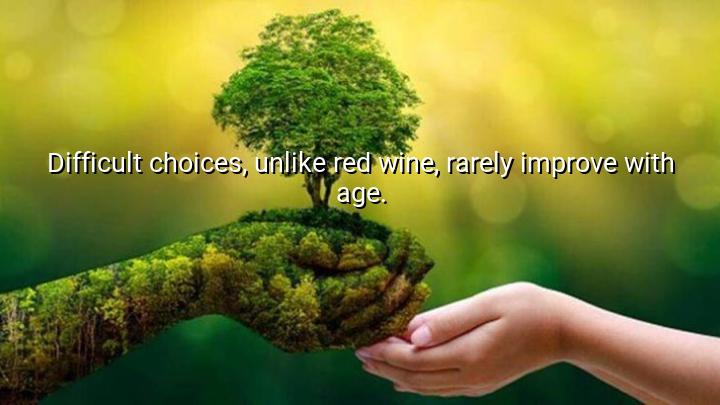




Richard N. Haass’s quote, "Difficult choices, unlike red wine, rarely improve with age," emphasizes that, unlike some things that become better over time, difficult choices tend to remain just as challenging or even worsen as time passes. Haass is suggesting that waiting too long to make a decision or postponing difficult choices can lead to complications or a worsening of the situation. While certain things, like red wine, improve with age due to factors like aging and refinement, the nature of difficult decisions doesn’t lend itself to improvement over time.
The comparison to red wine serves as a metaphor for how time can enhance certain things, such as flavor or value, but does not have the same effect on the problems we face. Haass is urging that tough decisions need to be addressed promptly rather than delayed. The longer one waits to make a hard choice, the more complex it may become, and the fewer opportunities there may be to resolve the issue effectively.
This perspective is particularly relevant in politics, business, or other leadership positions where decisions can have long-lasting effects. Haass, who is known for his work in international relations, may be reflecting on how diplomatic or policy decisions become more difficult as conflicts or issues escalate. His quote suggests that immediate action is often necessary to prevent issues from becoming entrenched or more difficult to manage.
Ultimately, Haass’s quote encourages a sense of urgency and responsibility when facing difficult choices. It challenges the common notion that time will naturally bring clarity or resolution, instead asserting that procrastination can lead to more serious challenges, and decisions are often better made sooner rather than later.

KKNguyen Kim Khanh
The imagery here is sharp—using red wine as a symbol of graceful aging makes the reality of tough choices even starker. I can’t help but think of moments in my own life where delay only added anxiety. Does acting swiftly always mean acting wisely, though? I’d love to explore how we can strike a balance between thoughtful decision-making and timely action.
NNNguyen Nhat
It’s interesting how this quote challenges the common belief that time brings clarity. I wonder if that’s actually a myth we tell ourselves to justify procrastination. Have we created a culture that encourages over-reflection rather than decisive action? And at what point does waiting turn from wise to reckless when it comes to leadership or personal growth?
HMHoang Manh
This makes me think about how indecision can become its own decision. Avoiding difficult choices often creates ripple effects that make the situation worse. But why do we think time will do the work for us? I’d be curious to know if Haass is speaking from political experience or personal ones—either way, the logic applies universally.
LKPhuong Linh Khuc
I love the metaphor in this quote—it’s so relatable. But I also wonder, are there exceptions? Are there difficult choices that actually do benefit from waiting—where circumstances shift, or new information emerges? Or is that just wishful thinking dressed up as patience? Sometimes it’s hard to tell the difference between strategic delay and pure avoidance.
TTTien Thuy
This quote is clever and brutally true. It makes me reflect on how often I’ve put off making tough decisions in hopes they’ll get easier with time. Spoiler alert—they usually don’t. I wonder why we tend to delay the inevitable. Is it fear of regret, lack of clarity, or just emotional fatigue? Maybe facing discomfort early on is the real act of maturity.