

I did not support the U.S. decision to intervene with military force in Libya. The evidence was not persuasive that a large-scale massacre or genocide was either likely or imminent. Policies other than military intervention were never given a full chance.
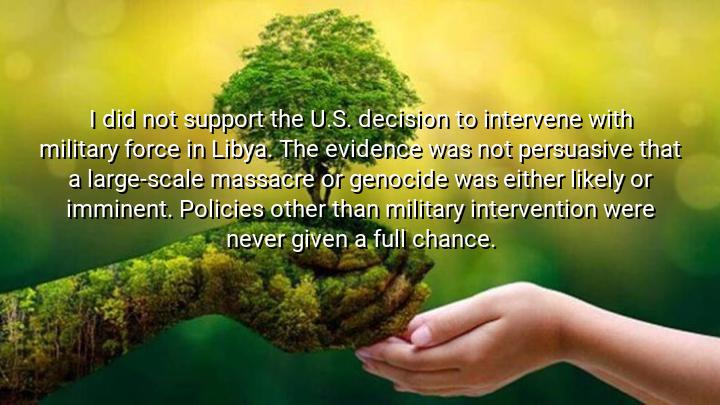




In this quote, Richard N. Haass, a prominent American diplomat and the president of the Council on Foreign Relations, expresses his opposition to the U.S. decision to use military force in Libya. Haass argues that the evidence presented to justify intervention was not convincing enough to warrant such drastic action. He specifically notes that there was no strong indication that a large-scale massacre or genocide was either likely or imminent, which were key justifications for military intervention under the responsibility to protect doctrine.
Haass also criticizes the lack of consideration for alternative policies to address the situation in Libya. He suggests that diplomatic, economic, or other non-military measures were not fully explored before the decision to intervene. This reflects a broader skepticism toward military solutions, especially in complex international crises, where other approaches might yield more sustainable results without the risks and consequences of armed conflict.
The statement underscores Haass's belief in diplomacy and restraint in international relations. By questioning the efficacy and justification of military action, Haass emphasizes the importance of careful weighing of evidence and consideration of all possible options before resorting to force. His position aligns with his broader views on the importance of international cooperation and cautious engagement in global affairs.
Richard N. Haass has been a significant voice in U.S. foreign policy debates, advocating for a more pragmatic and strategic approach to international issues. His opposition to the U.S. intervention in Libya reflects his belief in the necessity of diplomatic alternatives and the careful analysis of potential consequences before making military decisions. This quote highlights Haass's cautious and measured approach to foreign policy, emphasizing the need for thoughtful evaluation and restraint in the use of military power.

AAdministratorAdministrator
Welcome, honored guests. Please leave a comment, we will respond soon