

All imaginable futures are not equally possible.
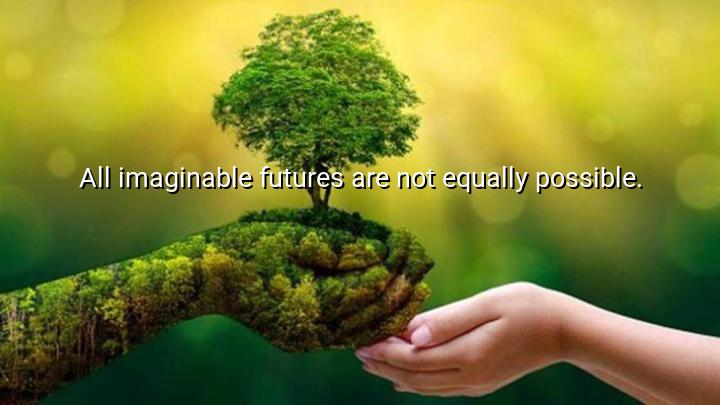




The quote, "All imaginable futures are not equally possible," comes from Kevin Kelly, an American writer, technologist, and futurist. Kelly is known for his work on the intersection of technology and society, especially in his book "What Technology Wants". This quote reflects his perspective on the limits of human foresight and the potential paths that the future can take. While we can envision numerous possibilities, not all of them are equally feasible or likely due to a range of constraints, such as technological, societal, or environmental factors.
In the statement, Kelly is suggesting that while human imagination can conceive a vast array of potential futures, the reality of what is achievable is bound by a set of practical limitations. Some futures, though possible in theory, might be constrained by existing technological barriers, ethical considerations, or political will. This means that while innovation allows for limitless creativity, the probability of certain futures coming to fruition is not evenly distributed. Certain futures might be far more plausible and achievable than others, depending on the current trajectory of society.
The quote also emphasizes the complexity of predicting the future. Many people may imagine a future shaped by science fiction or utopian ideals, but Kelly’s statement serves as a reminder that not all those imagined futures are realistically attainable. As a futurist, he is focused on understanding the factors that influence how technology evolves and how it intersects with human culture. The future, therefore, is not just a matter of dreaming but also understanding the systemic constraints that shape what is possible.
Ultimately, Kelly’s quote invites reflection on the difference between imagination and probability in shaping our collective future. While we can dream of limitless possibilities, we must recognize that the future we create will be determined by a combination of feasibility, available resources, and human choice. It's a call to focus on those futures that are not just imaginable but also achievable and sustainable within the context of our current world.

AAdministratorAdministrator
Welcome, honored guests. Please leave a comment, we will respond soon