

Age wrinkles the body. Quitting wrinkles the soul.
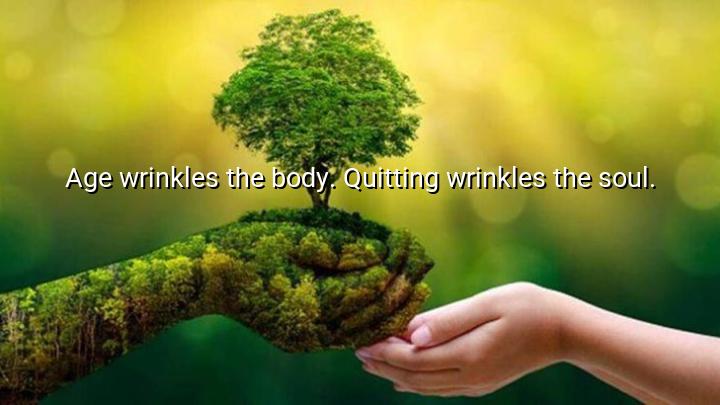




The quote "Age wrinkles the body. Quitting wrinkles the soul" by Douglas MacArthur, an American five-star general, highlights the difference between the physical effects of aging and the spiritual or emotional impact of giving up or losing one's drive. MacArthur suggests that while aging inevitably takes a toll on the body, leading to wrinkles, fatigue, and decline, it is the act of quitting—whether in life, work, or personal goals—that causes the deeper, more lasting damage to the spirit or soul.
MacArthur contrasts the natural process of aging with the voluntary act of quitting. He implies that age is something beyond our control, a normal part of life, and while it affects the body, it does not necessarily affect one's inner strength or resolve. On the other hand, quitting, or giving up on goals, dreams, or pursuits, leads to a weakening of the soul—making one lose a sense of purpose, motivation, and meaning in life. This “wrinkling of the soul” is a metaphor for the emotional or mental deterioration that happens when someone stops fighting, growing, or striving.
The idea that quitting wrinkles the soul suggests that the mindset is crucial in maintaining a sense of vitality and fulfillment, regardless of age. MacArthur encourages people to continue pursuing their passions and facing life’s challenges with determination, no matter how old they are. While the body may age and show physical signs of wear, maintaining a resilient spirit keeps one emotionally and mentally young, full of purpose and possibility.
Ultimately, MacArthur’s quote serves as a reminder that while aging is inevitable, giving up is a choice. The physical effects of aging may leave wrinkles on the body, but the decision to quit or give in to apathy can lead to a much deeper and more destructive form of decay in one’s character and spirit. This underscores the importance of perseverance and resilience, no matter one's age, in maintaining a strong and vibrant soul.

VNNguyen Viet Nhat
I find this quote incredibly motivating. It reminds me that while the body ages naturally, the soul is something we have more control over through our mindset and actions. It also raises the question: what does it really mean to 'quit'? Is quitting a job you hate soul-wrinkling, or is that an act of courage? I think defining what quitting means in different contexts is crucial to understanding this fully.
TATho An
I admire the toughness in this statement. It feels like something you'd hear in a military pep talk, and MacArthur’s background makes sense in that context. But is this mentality always applicable in real life? In a world that emphasizes mental health and balance, can we still value perseverance without glorifying burnout or emotional suppression? This quote makes me want to explore that nuance more deeply.
KWKhang Wang
This quote hits hard. Aging is inevitable, but quitting feels like a choice—one that leaves a deeper mark. I relate to this as someone who’s faced setbacks that made me want to stop trying. But I worry: does this view risk shaming people who do give up sometimes, even for valid reasons? Is there room in this philosophy for compassion toward those who feel too tired to continue?
THLan Anh_9C_2007 Trieu Hoang
MacArthur draws a powerful line between external change and internal surrender. I think he's emphasizing resilience, which is so important in every phase of life. But I wonder—how do we know when persistence becomes harmful? Sometimes quitting is self-preservation, not weakness. So where’s the balance? When do we push through and when do we gracefully let go without letting it damage our spirit?
NH31. 6/9 Dang Thi Thao Nhi HVN
This quote really speaks to the difference between physical aging and emotional or spiritual decline. It makes me think—how often do people equate getting older with giving up? But maybe it's not about age at all, but about attitude. Is it possible to keep a youthful spirit regardless of what your body is doing? I’d love to hear how others stay mentally strong and avoid 'soul wrinkles' as they grow older.