

Could I have but a line a century hence crediting a contribution to the advance of peace, I would yield every honor which has been accorded by war.
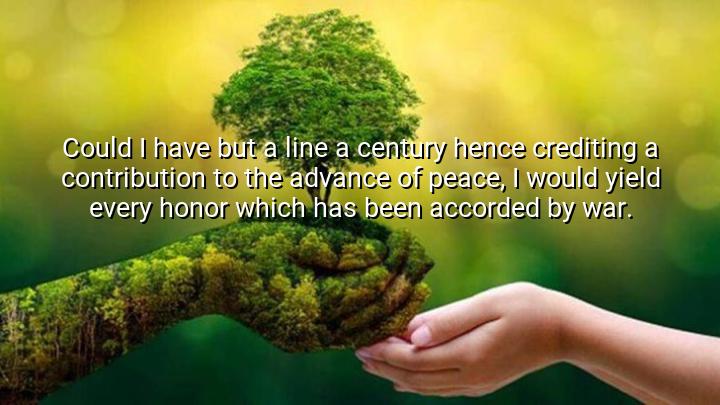




Douglas MacArthur’s quote, "Could I have but a line a century hence crediting a contribution to the advance of peace, I would yield every honor which has been accorded by war," reflects his personal perspective on the value of peace over the glory of military success. MacArthur, a prominent military leader during World War II and the Korean War, is expressing the idea that, if given the choice, he would gladly trade all the recognition and honor he received for his role in war for even the smallest acknowledgment of his contribution to peace. This underscores his belief that lasting peace is a far more noble and significant achievement than any victory won through conflict.
In this quote, MacArthur acknowledges the honors he earned through his military career, but he makes it clear that, in the long run, the true worth of a person’s legacy lies in their ability to contribute to peace. The mention of a "line a century hence" suggests that historical judgment may ultimately recognize efforts for peace over military triumphs, highlighting the enduring importance of peace-building in contrast to the fleeting nature of war accolades.
MacArthur, who was deeply involved in military strategy and leadership during some of the most significant conflicts of the 20th century, likely expressed this sentiment later in life as he reflected on his experiences. Despite his considerable military achievements, MacArthur came to value the lasting legacy of peace over the temporary honor of war. His career, which was marked by both triumph and controversy, likely shaped this reflection on the importance of contributing to global harmony rather than conflict.
In essence, MacArthur’s quote speaks to the idea that the true worth of one’s contributions should be measured not by the honors and victories gained through war, but by the lasting impact one has on promoting and maintaining peace. His words reflect a desire for a legacy that transcends military accomplishment, advocating for the enduring value of peace in shaping history.

AAdministratorAdministrator
Welcome, honored guests. Please leave a comment, we will respond soon