

A comfortable old age is the reward of a well-spent youth. Instead of its bringing sad and melancholy prospects of decay, it would give us hopes of eternal youth in a better world.
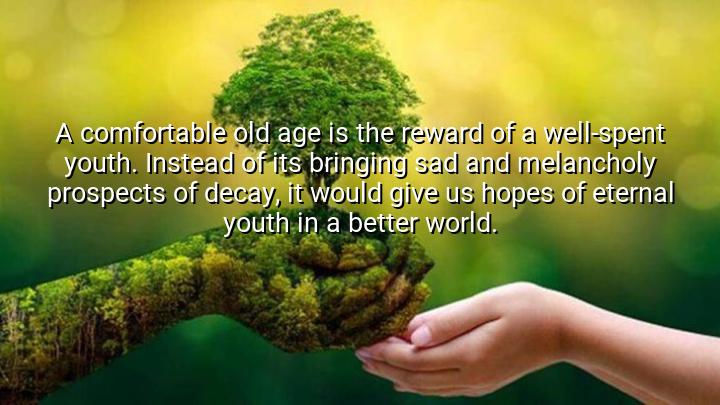




The quote "A comfortable old age is the reward of a well-spent youth. Instead of its bringing sad and melancholy prospects of decay, it would give us hopes of eternal youth in a better world" by Maurice Chevalier reflects the idea that how we live our youth directly impacts the quality of our old age. Chevalier, a French actor and singer, suggests that a well-spent youth—characterized by good choices, healthy living, and positive actions—leads to a more comfortable and rewarding old age. Rather than fearing aging as a time of physical decline, a fulfilling youth gives us a sense of peace and contentment in later years.
Chevalier also challenges the negative perception of old age as a period of decay and loss. Instead, he envisions old age as a time that can bring hope and the promise of eternal youth, but not in the physical sense. He implies that if we live our lives well, we can look forward to the future with a sense of optimism, free from the dread of aging. The idea of eternal youth in a better world connects to the hope for spiritual renewal or peace in the afterlife, suggesting that a well-lived life can offer not just comfort in old age but the belief in a better existence beyond this one.
The quote also speaks to the spiritual aspect of aging. Chevalier suggests that instead of focusing on the physical decline that often accompanies old age, one can focus on the internal peace, wisdom, and contentment that come from having lived a fulfilling and meaningful life. These qualities provide a sense of youthfulness that transcends physical appearance or health, offering a sense of joy and purpose even in later years.
Ultimately, Chevalier’s quote encourages a perspective on aging that is not dominated by fear or regret but is seen as the natural reward for living a good and purposeful life. A well-lived youth sets the foundation for a peaceful and hopeful old age, one that offers not just a comfortable physical existence but also a sense of spiritual renewal and optimism for what lies ahead.

BTBinh TV
This quote really made me pause. The connection between youth and old age feels almost poetic here. But what if someone’s youth was spent in struggle—not through fault, but circumstance? Can old age still be a time of comfort for them? I’m curious whether emotional resilience, rather than just ‘well-spent’ years, plays a bigger role in shaping a fulfilling later life. What does it really take to earn peace in old age?
HDThi Thu Ha Dao
What a spiritual and hopeful perspective this quote offers. I like the idea that growing old doesn’t have to mean growing weary—that it can actually be a time of peace and reflection. But I do wonder, how much of this depends on one’s beliefs about the afterlife? The second part of the quote hints at religious hope. Would this message hold the same weight for someone who doesn't believe in a 'better world'?
NNNhi Ngoc
This quote makes me think about the balance between living wisely and living fully. If youth is the foundation for a peaceful old age, are we encouraging young people to focus too much on the future rather than embracing the present? Can a youth filled with spontaneity, mistakes, and growth still count as ‘well-spent’? It’s an inspiring message, but it also raises tough questions about how we define ‘well-lived’.
TPTuyen Phan
I appreciate the optimism in this quote. It frames aging as a reward rather than a decline, and that shift in perspective feels empowering. Do you think today’s culture supports this view, though? With so much emphasis on youth and productivity, I wonder whether older generations feel valued enough to embrace aging as a triumph. Maybe we need to collectively change how we talk about aging and success.
HTHai Tran
This quote is comforting but also a bit idealistic, isn’t it? It suggests that how we live in our youth determines the peace we experience in old age. But what about people who’ve faced hardship early on—poverty, trauma, lack of opportunity? Can they still hope for a comfortable old age or is that privilege reserved only for the fortunate? It’s a beautiful thought, but it makes me reflect on fairness, too.