

Youth is the gift of nature, but age is a work of art.
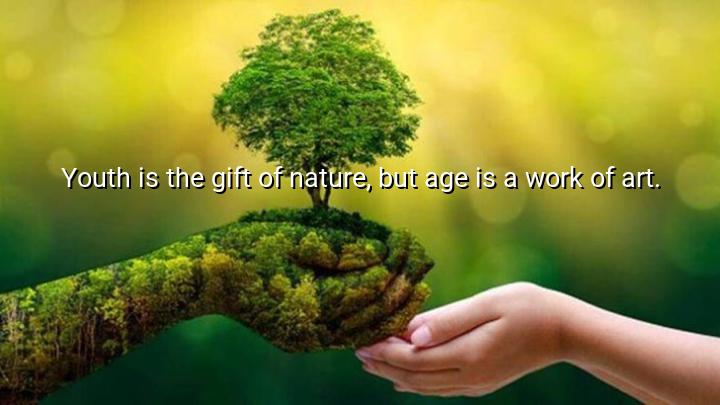




In this thought-provoking quote by Stanislaw Jerzy Lec, he draws a contrast between youth and age by describing youth as a gift of nature and age as a work of art. By calling youth a gift of nature, Lec suggests that it is something inherent, unearned, and simply given by the natural course of life. Youth comes with the vitality, energy, and opportunities to explore, but it is not something that can be controlled or crafted by the individual.
On the other hand, Lec's description of age as a work of art implies that aging is not just a passive process, but one that involves intentionality, experience, and transformation. As we age, we shape ourselves through choices, lessons learned, and the wisdom gained from years of living. Unlike youth, which is automatic, age requires effort, perspective, and refinement, much like a piece of art that evolves through the careful and deliberate actions of the artist.
This contrast between the gift of youth and the craftsmanship of age highlights the value of experience in shaping one's life. While youth is fleeting and dependent on nature, age allows for the possibility of growth and maturity. It’s a reminder that while the beauty of youth is immediate and natural, the beauty of age comes from self-expression, reflection, and accomplishments built over time.
Ultimately, Lec’s quote encourages us to appreciate the art of growing older, recognizing that the process of aging is not something to be feared or avoided, but rather something to be celebrated. Age, like art, can bring with it a richness and depth that youth alone cannot provide.

DSHuynh Dieu Sanh
This quote hit me emotionally. Youth is fleeting, a gift we don’t choose, but aging—that’s something we build with our actions, choices, and mindset. It reminds me of how older people often carry an elegance that only comes from lived experience. But I’m curious—do we as a society appreciate aging as an art, or do we devalue it by prioritizing youth? It seems like this perspective could challenge a lot of ageist attitudes.
TVTuong Vy
There’s a sense of empowerment in this quote that I find really motivating. It suggests that aging well isn’t about luck or genetics, but about intention, reflection, and growth. Still, I wonder—how can someone start embracing this mindset if they’ve always feared aging? Are there habits or mental shifts that help people see their later years as something to sculpt and refine rather than dread or avoid?
MQ27- Minh Quan
This quote made me stop and reflect. If age is truly a work of art, then is it also subject to interpretation—like all art? Could some see their aging as tragic, others as comedic or profound? Does how we age depend more on how we view our own life’s story? I’m curious how different cultures and personalities interpret the 'art' of aging and what makes it beautiful to each person.
QDDinh Quang Dat
I appreciate the contrast here between youth being natural and age being earned. It feels like it celebrates the effort that goes into growing older with grace and character. But what if someone feels like they haven’t aged well—emotionally, mentally, or socially? Is there still time to transform their later years into a masterpiece? I think it raises interesting questions about redemption and growth, even late in life.
TTthanh thao
What a poetic way to look at life’s later years! I love the idea that aging isn’t just decay—it’s craftsmanship. But here’s my question: what tools and materials do we need to turn age into art? Is it wisdom, resilience, reflection? Or something more practical like strong relationships and good health habits? This quote is inspiring, but I’d like to explore how we actually 'make' that art in the real world.