

Won't you come into the garden? I would like my roses to see you.
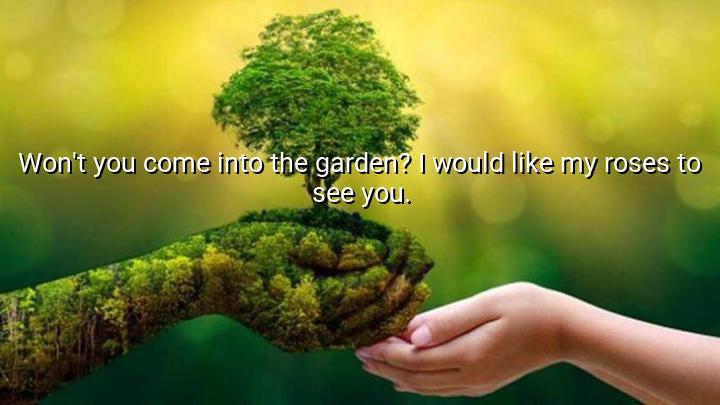




The quote by Richard Brinsley Sheridan, "Won't you come into the garden? I would like my roses to see you," carries an invitation filled with charm and romanticism. The speaker is not only inviting someone into the garden but also creating a personal connection between the guest and the natural world around them. The reference to the roses seeing the guest gives a poetic quality to the garden, personifying the flowers and suggesting that the beauty of the garden is enhanced by the presence of the person being invited. It implies that the roses, like the speaker, would also appreciate the guest's company.
The quote is often interpreted as a metaphor for the idea that nature can play a role in human relationships. The garden represents a space of beauty and connection, where both the human and the natural worlds intersect. By inviting someone into the garden, the speaker is offering not just a physical space, but an experience of harmony and appreciation of nature's beauty. The phrase "I would like my roses to see you" suggests that the meeting is not just about the people involved but about sharing something special—a moment where the person, the garden, and the flowers are all intertwined in an intimate setting.
The invitation in this quote also emphasizes the sense of hospitality and the warmth of sharing a personal and serene space. The idea of wanting the roses to "see" the guest reflects a feeling of wanting to show off something precious and beautiful, and it also highlights the speaker's desire to impress or delight the guest. It reveals the speaker’s enjoyment of the garden, and their wish to extend that pleasure to someone else, in a setting filled with elegance and charm.
The origin of the quote is tied to Richard Brinsley Sheridan's work as a playwright and his ability to weave wit and romance into his dialogue. Sheridan, known for his comedic yet poignant writing, often explored themes of love, relationships, and social interaction. This particular line comes from his play The School for Scandal, where gardens and nature are frequently used as metaphors for deeper emotional and social dynamics. It reflects his talent for blending humor and sensitivity in everyday conversations, adding a touch of romanticism and intimacy.

AAdministratorAdministrator
Welcome, honored guests. Please leave a comment, we will respond soon