

When I turned 60, it didn't bother me at all.
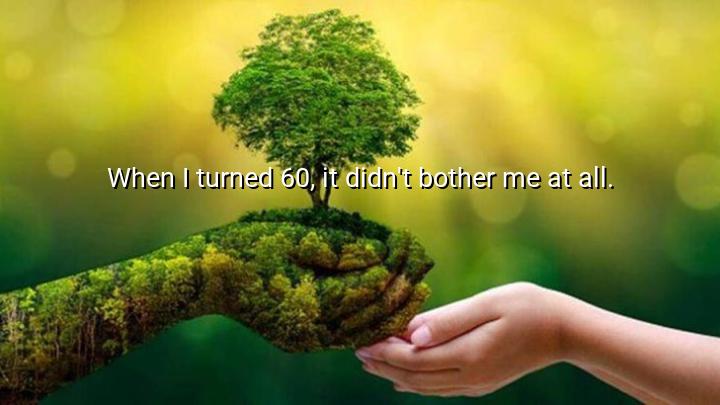




The quote "When I turned 60, it didn't bother me at all" by Yoko Ono reflects her perspective on aging and the passing of time. Yoko Ono, a celebrated artist and activist, often challenges conventional ideas and societal norms. In this quote, she expresses a sense of acceptance and freedom regarding the natural process of getting older. Her words suggest that age, often seen as a burden or a source of worry for many, holds no power over her.
Yoko Ono was born in 1933 and became famous not only as the wife of John Lennon but also for her significant contributions to art, music, and social movements. As an avant-garde artist, she frequently advocated for self-expression and individual freedom, often through her work and public statements. This quote aligns with her philosophy of embracing life without fear or hesitation, regardless of age.
Her approach to aging challenges societal views that often associate youth with value and beauty. Instead, Ono's statement encourages a more liberating view, where age is seen as just another number, not something that should restrict one’s mindset or happiness. By expressing no bother or concern about turning 60, she highlights her ability to find joy and peace within herself.
Ultimately, Yoko Ono’s quote speaks to the importance of self-acceptance and mindfulness, encouraging people to live fully at every stage of life, free from the pressures of aging.

TDLe Thanh Dat
This perspective feels refreshing in a world obsessed with youth. I’d love to know what made her feel so at ease about turning 60. Was it personal growth, creative success, emotional resilience—or maybe a combination of all those things? It makes me wonder what habits or philosophies we can adopt now to help us feel that kind of peace later on.
NMBui Nhat Minh
There’s a kind of quiet strength in this quote. I think it’s important to hear voices like Yoko Ono’s that challenge the negative stigma around aging. Do you think having a strong sense of identity or purpose plays a role in how we emotionally respond to getting older? It seems like people who are confident in who they are may care less about their age.
MTMai Thu
I love how empowering this statement is. It makes me question my own anxieties about aging—am I worrying over numbers that might not even matter? Maybe the key is not just how old you are but how fulfilled you feel in life. Could it be that milestones like 60 only feel heavy if you let society tell you they should be?
NNnguyen nhan
This quote really got me thinking about how our society shapes our attitudes toward aging. For some, 60 is seen as a decline, while others, like Yoko Ono, see it as just another number. I wonder how much of this is influenced by culture, self-perception, or even career satisfaction. What makes some people embrace aging while others resist it so strongly?
TBNguyen ta ben
I admire the calmness in this statement. It’s not often we hear someone speak so unfazed about reaching an age that many dread. It makes me wonder—what kind of mindset or life experiences help someone embrace aging with such peace? Did Yoko Ono always feel this way about getting older, or is this perspective something she developed over time through reflection and acceptance of her journey?