

When I look back at that freedom of childhood, which is in a way infinite, and at all the joy and the intense happiness, now lost, I sometimes think that childhood is where the real meaning of life is located, and that we, adults, are its servants - that that's our purpose.
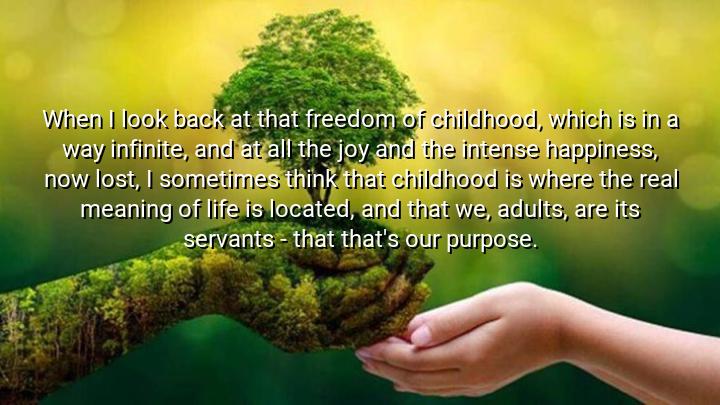




The quote "When I look back at that freedom of childhood, which is in a way infinite, and at all the joy and the intense happiness, now lost, I sometimes think that childhood is where the real meaning of life is located, and that we, adults, are its servants - that that's our purpose" by Karl Ove Knausgard reflects a nostalgic and philosophical view on the inherent freedom and happiness of childhood. Knausgard is reflecting on the way childhood seems full of limitless possibilities and untainted joy, qualities that, as adults, we may lose or forget over time. He suggests that childhood holds the true essence of life, and as adults, we are merely servants to it—attempting to recreate or reconnect with the purity of those early years.
Knausgard’s statement emphasizes the contrast between the carefree existence of childhood and the responsibilities and struggles that come with adulthood. The infinite freedom of childhood is something adults can never truly reclaim, making it a symbol of unrestrained possibility and happiness. This loss, which Knausgard refers to as "now lost," highlights the inevitable transition from the simplicity of childhood to the complexities of adult life. In this view, adulthood becomes a journey of service to that lost joy, as people search for ways to recapture the essence of their early years.
The origin of the quote lies in Knausgard’s broader exploration of memory, identity, and the passage of time, particularly in his autobiographical series My Struggle. He often delves deeply into personal reflections on his own experiences growing up, making this quote an extension of his contemplations on life and the human condition. Knausgard’s work is known for its focus on the inner lives of individuals, especially how the past shapes the present, and this quote encapsulates his sentiment about the innocence and meaning that he believes are embedded in childhood.
Ultimately, Knausgard’s quote challenges adults to reconsider their lives through the lens of childhood, where happiness and freedom are untainted by the burdens of maturity. It suggests that the pursuit of these qualities should remain central to adult life, as reconnecting with the joy of childhood could offer deeper meaning and fulfillment. Through this reflection, Knausgard contemplates the purpose of life as a journey to understand and reconnect with the lost essence of childhood.

AAdministratorAdministrator
Welcome, honored guests. Please leave a comment, we will respond soon