

When I graduated from high school, I thought I wanted to make science fiction movies, so I applied to film school, but I couldn't get in. A professor told me I should try architecture instead.
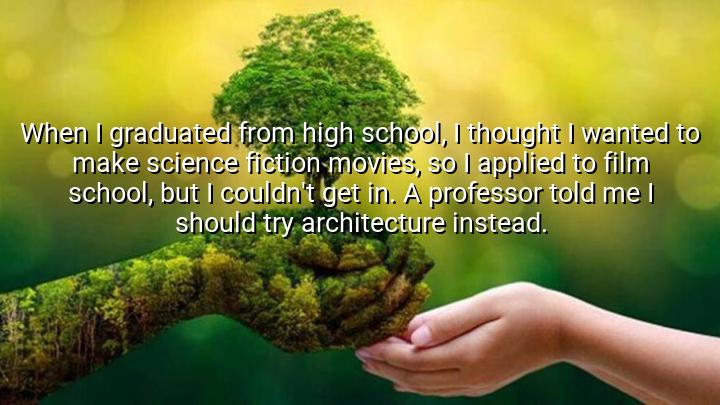




The quote by Ma Yansong — "When I graduated from high school, I thought I wanted to make science fiction movies, so I applied to film school, but I couldn't get in. A professor told me I should try architecture instead." — reveals the unexpected path that led one of China's most visionary architects into the world of design. Ma Yansong, known for his futuristic and organic architectural style, initially aspired to be a filmmaker, drawn to the imaginative and immersive qualities of science fiction. His passion for visual storytelling and speculative worlds found its first outlet in cinema.
However, after being rejected from film school, a turning point came through the advice of a professor, who saw potential in channeling Ma’s creativity into architecture. This suggestion became transformative, redirecting his ambitions from film to a discipline that still allowed him to shape worlds, but through space, form, and material rather than a camera lens. In many ways, Ma’s architectural work retains the narrative energy and futuristic vision he admired in sci-fi films.
The influence of science fiction remains a strong undercurrent in his designs, which often defy traditional geometry and embrace fluid, dreamlike forms. Projects like the Absolute Towers in Canada and the Harbin Opera House in China reflect his commitment to architecture that feels otherworldly, emotional, and cinematic. His journey from failed film school applicant to globally recognized architect shows how a creative vision can adapt and thrive across disciplines.
The origin of this quote likely comes from Ma’s interviews or lectures, where he frequently reflects on his early inspirations and the non-linear path that brought him to architecture. His story encourages aspiring creatives to remain open to unexpected opportunities and illustrates how creative impulses can evolve into new forms without losing their original essence. For Ma, architecture became the medium through which he could still tell stories, craft immersive environments, and challenge conventional boundaries — much like the science fiction he once dreamed of creating.

AAdministratorAdministrator
Welcome, honored guests. Please leave a comment, we will respond soon