

Since the Beijing Olympics in 2008, our office has been discussing how we can make architecture more human and at one with nature. We need to ask ourselves, what legacy do we want to leave behind on humankind's urban culture?
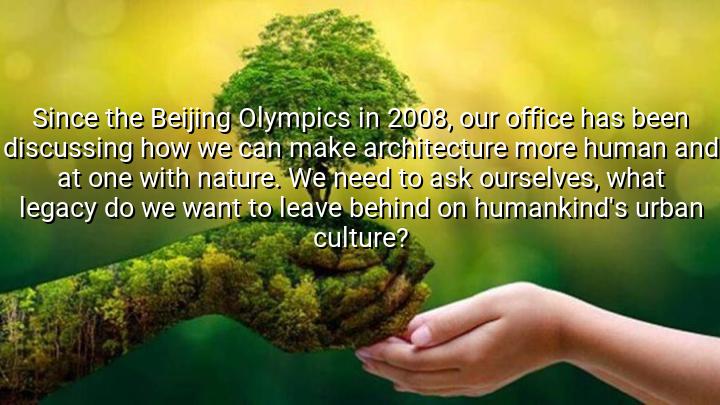




The quote by Ma Yansong — "Since the Beijing Olympics in 2008, our office has been discussing how we can make architecture more human and at one with nature. We need to ask ourselves, what legacy do we want to leave behind on humankind's urban culture?" — reflects his long-standing vision of creating architecture that transcends utility and contributes to the emotional, social, and ecological well-being of society. Inspired by the global attention and national pride surrounding the 2008 Olympics, Ma and his team began to re-evaluate the direction of urban development and its impact on both people and the environment.
The idea of making architecture more human suggests a shift away from impersonal, rigid designs toward spaces that prioritize comfort, identity, and emotional resonance. By aiming to harmonize buildings with nature, Ma advocates for an approach that respects natural landscapes, integrates green spaces, and reduces the environmental footprint of urban construction. His work often explores how architecture can evoke feelings, foster community, and restore a sense of belonging in the rapidly expanding cities of the modern world.
The mention of legacy and urban culture shows Ma’s deep concern for the long-term consequences of architectural choices. Rather than simply responding to market demand or government directives, he urges architects to consider the cultural imprint their work will leave behind. What kind of world will our buildings create for future generations? Will our cities nurture human connection and cultural memory, or will they become alienating landscapes of steel and glass?
The origin of this quote is rooted in Ma Yansong’s post-Olympic reflections and his evolution as a thought leader in contemporary architecture. Following the dramatic architectural expressions showcased during the Beijing Olympics, he began to question how iconic structures could move beyond national symbolism to serve more inclusive, sustainable, and emotionally rich purposes. His statement is both a critique and a call to action — to reimagine architecture not as a monument to progress alone, but as a legacy of care, beauty, and coexistence with nature.

AAdministratorAdministrator
Welcome, honored guests. Please leave a comment, we will respond soon