

What if we treat the high-rise like a mountain, or we have gardens in the sky, or waterfalls? I think that's the most challenging thing I want to try in my architecture.
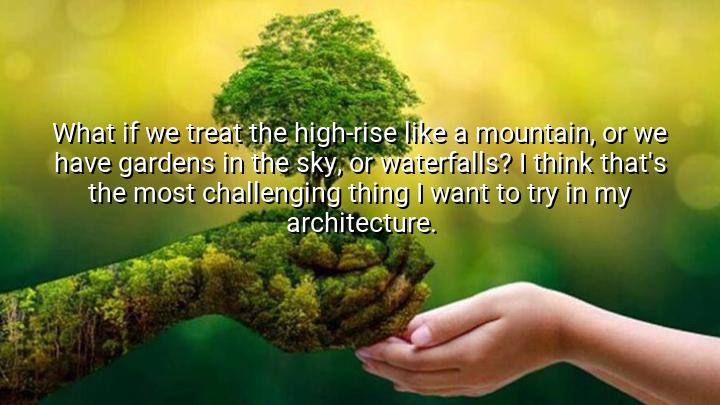




Ma Yansong’s quote expresses his ambition to reimagine architecture by blending natural elements with urban forms, challenging the conventional image of the high-rise building. When he asks, “What if we treat the high-rise like a mountain,” he is inviting us to see architecture not as rigid, artificial structures, but as extensions of the natural landscape. This idea reflects his desire to make cities feel more organic, human, and inspirational, rather than cold and mechanical.
By envisioning features like “gardens in the sky” or waterfalls, Ma proposes integrating nature into vertical architecture, turning tall buildings into living ecosystems. These elements are not just decorative—they serve to reconnect people with natural beauty, even in dense urban environments. Such visions align with his broader architectural philosophy of Shanshui City, which draws from traditional Chinese aesthetics where mountains (shan) and water (shui) symbolize harmony between humans and nature.
When he states, “that’s the most challenging thing I want to try,” Ma acknowledges the technical and conceptual difficulties of fusing nature and architecture in meaningful ways. The challenge lies not only in engineering such features but also in shifting societal expectations of what urban development should look like. His goal is to inspire new ways of thinking about how cities can support emotional well-being, cultural identity, and sustainability.
This quote originates from Ma Yansong’s lectures and interviews, where he elaborates on his design goals as the founder of MAD Architects. Known for futuristic and poetic buildings, Ma consistently advocates for emotionally driven, nature-inspired design. Through this quote, he invites both architects and the public to rethink the relationship between the built environment and the natural world, pushing for a future where architecture doesn’t just house people—it elevates their connection to nature and imagination.

AAdministratorAdministrator
Welcome, honored guests. Please leave a comment, we will respond soon