

We've come quite far with the idea of equality between sexes, but there's still a lot of conversations that need to be had about men in power.
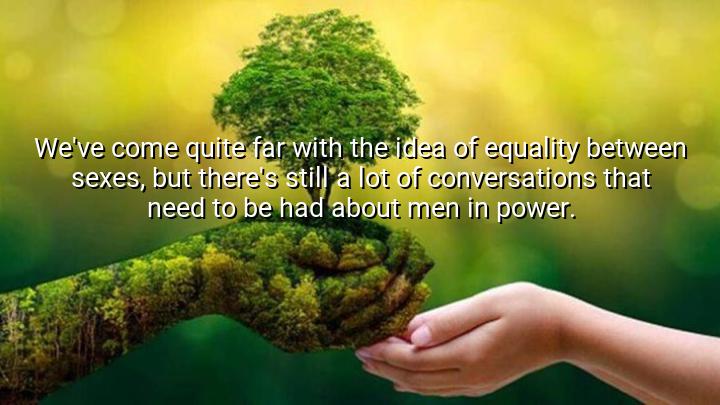




Jonathan Bailey’s quote, “We’ve come quite far with the idea of equality between sexes, but there’s still a lot of conversations that need to be had about men in power,” reflects a nuanced perspective on the ongoing struggle for gender equality. Bailey acknowledges the progress that has been made in terms of equality between men and women, yet he highlights that significant work remains, particularly regarding the dynamics of power. The statement points to the need for continued dialogue around how men hold and exercise power in both public and private spheres, and the implications this has for achieving true gender equality.
Bailey’s reference to men in power underscores the imbalance that still exists in leadership roles across many industries, including politics, business, and the arts. While women have made strides in accessing positions of influence, men still overwhelmingly dominate these spaces. By bringing attention to this imbalance, Bailey calls for a more honest conversation about how patriarchy continues to shape societal structures, often limiting true equality by perpetuating systems where men maintain disproportionate power and influence.
The quote also suggests that conversations about gender equality need to go beyond just advocating for women’s rights or empowering women. Bailey emphasizes that men, particularly those in positions of power, must be part of the conversation. This implies that equality isn’t just about giving women equal opportunities but also about redefining how power works and how men can help dismantle the structures that continue to sustain gender inequality.
Ultimately, Bailey’s statement reflects his belief that while progress has been made, true equality will require a deeper, more comprehensive examination of men in power and how their roles can evolve to support a more just and balanced society. His call to continue the conversation about gender equality encourages a broader, more inclusive approach that includes a critical examination of both power dynamics and social structures.

AAdministratorAdministrator
Welcome, honored guests. Please leave a comment, we will respond soon