

We went from a world where almost nobody knew anything about computers to a world where almost all of us are computer geeks for a huge fraction of our day. And I'd like to see that happen with the digital world of biological molecules, too.
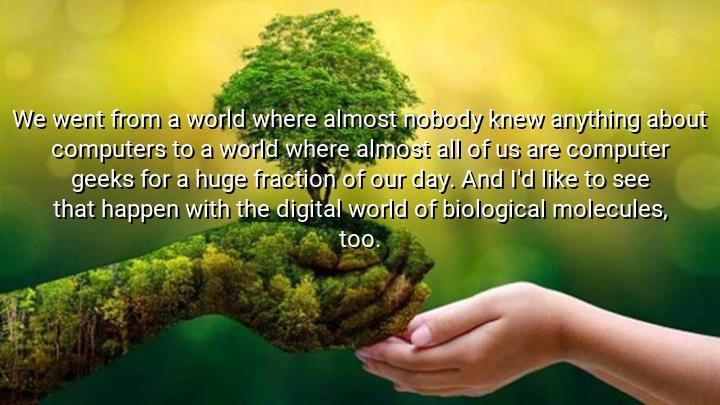




The quote, "We went from a world where almost nobody knew anything about computers to a world where almost all of us are computer geeks for a huge fraction of our day. And I'd like to see that happen with the digital world of biological molecules, too," by George M. Church, reflects his vision for the future of biotechnology. Church, a prominent scientist and innovator in the field of genetics, is drawing a parallel between the rapid rise of computing technology and the potential for similar advancements in the manipulation and understanding of biological molecules. He envisions a future where, just as computers have become ubiquitous in daily life, genetic and biological technology will also be accessible and understood by the masses.
The origin of the quote is tied to Church’s pioneering work in genetics, particularly in the realm of synthetic biology and genome sequencing. He has long advocated for making biotechnology as commonplace and intuitive as the use of computers. The comparison between computers and biological molecules highlights his belief that, with advances in genetic engineering and biotechnology, humanity could reach a point where we not only understand but actively manipulate the genetic code in ways that could transform health, agriculture, and many other fields.
At its core, the quote speaks to the democratization of technology. Just as the Internet and personal computers have become integral to modern life, Church is advocating for a similar widespread understanding and control over the digital world of DNA and biological systems. He imagines a future where genetics and biotechnology are not just fields for experts, but areas where everyone has some level of literacy and can actively participate in advancing the field, just as we now interact with technology daily.
The quote also highlights the revolutionary potential of biotechnology. Church is proposing that, just as computers have reshaped our society, biological technologies could similarly transform our lives. This includes advancements like gene editing, synthetic biology, and the ability to engineer life itself. Church is advocating for a future where understanding and manipulating the genetic code becomes as natural and widespread as using a smartphone, opening up new possibilities in medicine, agriculture, and environmental sustainability.

AAdministratorAdministrator
Welcome, honored guests. Please leave a comment, we will respond soon