

We should so provide for old age that it may have no urgent wants of this world to absorb it from meditation on the next. It is awful to see the lean hands of dotage making a coffer of the grave.
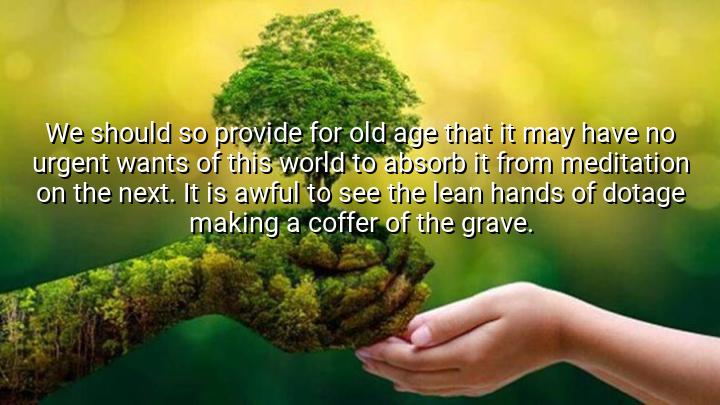




The quote "We should so provide for old age that it may have no urgent wants of this world to absorb it from meditation on the next. It is awful to see the lean hands of dotage making a coffer of the grave" by Pearl S. Buck reflects her thoughts on the importance of preparing for old age both financially and spiritually. Buck, an American writer and Nobel laureate, emphasizes that one should plan for the future in a way that allows for peace and contemplation, free from the worries of material needs. She suggests that old age should not be consumed with the struggles of survival, but should instead allow room for reflection on spiritual or philosophical matters.
Buck's quote conveys that the fear and anxiety of financial insecurity in old age can detract from the ability to focus on higher, more meaningful concerns. She advocates for ensuring that one's needs are met in a way that doesn’t distract from the meditation on life’s deeper questions or preparation for the next life. In essence, she argues that proper planning for old age should allow individuals to feel free and unburdened, so they can spend their later years with a sense of peace and purpose.
The second part of the quote, "It is awful to see the lean hands of dotage making a coffer of the grave", highlights the tragic image of the elderly spending their last years focused solely on accumulating wealth or securing their legacy, instead of reflecting on the inevitability of death and the importance of spiritual readiness. Buck’s use of "lean hands" symbolizes the frailty and emptiness of old age when it is filled with material concerns rather than meaningful reflection.
Ultimately, Buck’s quote advocates for a balanced approach to old age, where material security is not neglected, but spiritual fulfillment and inner peace take precedence. She urges us to prepare for old age in a way that leaves room for meditation and the contemplation of what comes next, without the burden of financial worries overshadowing the opportunity to reflect on the deeper meaning of life.

HHDinh Hoang Huy
There’s something almost prophetic about this quote. It implies that the end of life should be sacred, not consumed by scrambling for necessities. But realistically, how many people actually get that luxury? Should we be educating people earlier in life about saving, about legacy, about the emotional and spiritual aspects of aging? It makes me wonder if we’ve completely lost the art of aging well in modern society.
DQDo Diem Quynh
Pearl S. Buck’s words strike me as both poetic and tragic. Is it fair to expect old age to be a time of contemplation if we haven’t built lives that support that outcome? I wonder how cultural and economic differences affect this idea. In some communities, the elderly are revered and supported; in others, they’re left to fend for themselves. How much of this quote reflects individual versus systemic responsibility?
Tthao
This quote raises a heavy but necessary point. It's unsettling to think of aging individuals so consumed by physical needs that they can’t find space to think about deeper, existential matters. Is this a flaw in our healthcare systems? Or is it a broader societal failure to prepare for old age—emotionally, spiritually, and financially? The quote makes me reflect on how we plan (or fail to plan) for life’s final stage.
QMTran Quang Minh
I find this quote deeply moving, almost spiritual. It suggests that old age should be a time of introspection and peace, not burdened by worldly concerns. But in a world where many elderly people struggle with poverty or loneliness, is that even realistic? It raises a bigger issue—have we become too focused on prolonging life without ensuring quality of life in those final years?
MTBui Minh Thu
The imagery here is haunting but powerful. I can’t stop thinking about the phrase ‘coffer of the grave’—it’s as if life in old age becomes consumed with survival rather than reflection. Do we set people up to live or merely to delay death? How can we structure society so that old age becomes a time of peace, not desperation? The quote feels like a moral challenge we haven’t yet answered.