

We owe the Aboriginal peoples a debt that is four centuries old. It is their turn to become full partners in developing an even greater Canada. And the reconciliation required may be less a matter of legal texts than of attitudes of the heart.
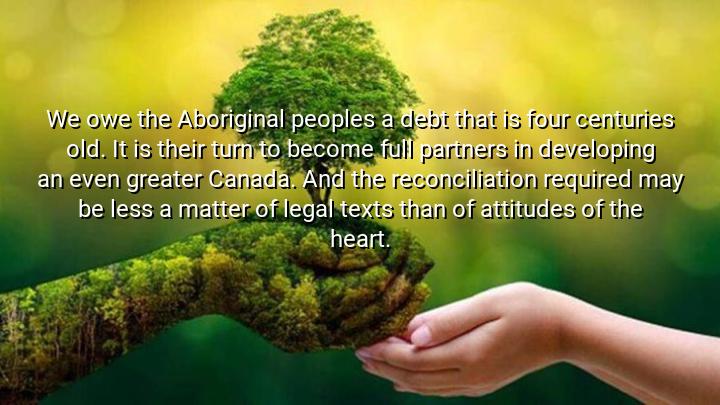




The quote by Romeo LeBlanc emphasizes Canada’s longstanding obligation to Aboriginal peoples, acknowledging a debt that spans four centuries. He highlights the historical injustices and systemic marginalization that Indigenous communities have endured and asserts that it is now time for them to become full partners in shaping the nation’s future. This framing underscores the need for inclusion, recognition, and shared responsibility in nation-building.
LeBlanc suggests that reconciliation is not only a matter of legal texts or formal agreements but also requires genuine attitudes of the heart. He emphasizes that true reconciliation involves empathy, respect, and understanding, alongside legislative or policy measures. This highlights the moral and emotional dimensions of addressing historical wrongs, suggesting that legal remedies alone cannot heal the relationships and trust that have been eroded over centuries.
The origin of this perspective comes from LeBlanc’s tenure as Governor General of Canada, a role in which he frequently addressed issues of Indigenous rights, social justice, and national unity. His statements reflect a broader movement in Canadian society toward recognizing the contributions and rights of Aboriginal peoples and fostering inclusive governance that honors historical context and cultural heritage.
Ultimately, the quote underscores the importance of moral responsibility, partnership, and reconciliation. LeBlanc advocates for a Canada where Aboriginal peoples are equal partners in national development and where societal change is guided not just by laws but by genuine understanding, respect, and shared commitment to justice.

AAdministratorAdministrator
Welcome, honored guests. Please leave a comment, we will respond soon