

We have enslaved the rest of the animal creation, and have treated our distant cousins in fur and feathers so badly that beyond doubt, if they were able to formulate a religion, they would depict the Devil in human form.
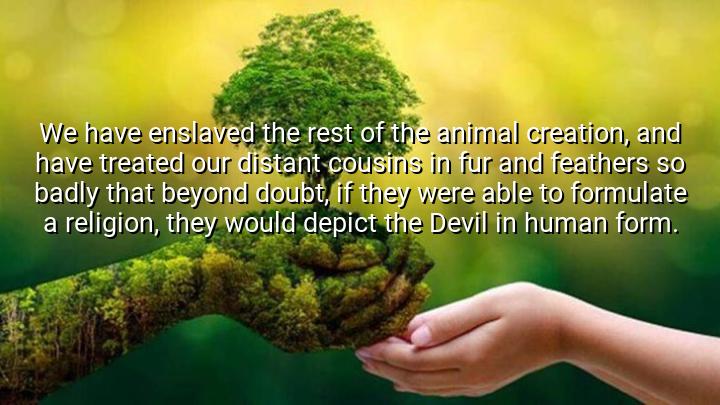




William Inge's quote highlights the inhumane treatment of animals by humans, suggesting that if animals had the cognitive ability to form their own religion, they would likely view humans as evil. Inge is emphasizing the stark contrast between the moral superiority that humans claim and the cruelty they often inflict on other species. By referring to humans as the Devil in this imagined animal religion, Inge underscores the depth of the exploitation and suffering caused by human actions.
The origin of this quote ties into Inge's broader views on morality and human nature. He was known for his critiques of society, especially its treatment of the vulnerable. The image of animals creating a religion to depict human beings as the embodiment of evil serves as a powerful metaphor for the unjust power dynamics humans impose over other creatures. It calls into question the ethical implications of how humans dominate and exploit animals for food, sport, and experimentation.
Inge’s reference to distant cousins in fur and feathers also speaks to the shared biological ties between humans and animals. This idea suggests a common ancestry or interconnectedness, which is often overlooked when humans justify the mistreatment of animals. Inge's statement serves as a reminder of how humans have historically used their intelligence and dominance to control nature, often to the detriment of the very creatures with whom they share the planet.
Ultimately, the quote serves as a critique of human hubris and a call to reflect on our moral responsibility toward other living beings. Inge is challenging us to examine how we define right and wrong in our relationships with animals, urging a reevaluation of our ethical stance in light of the suffering we have caused.

AAdministratorAdministrator
Welcome, honored guests. Please leave a comment, we will respond soon