

Literature flourishes best when it is half a trade and half an art.
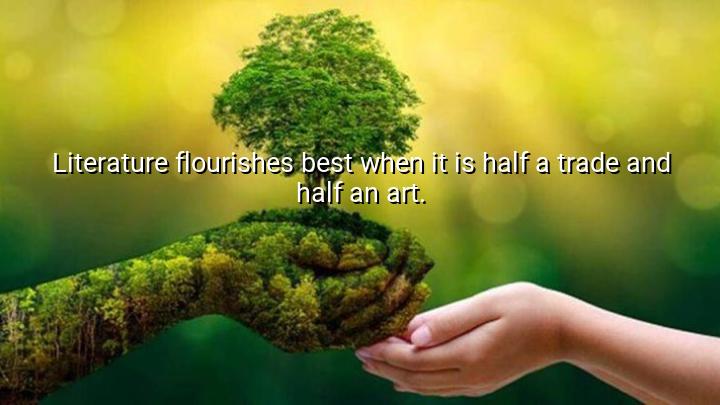




The quote "Literature flourishes best when it is half a trade and half an art." by William Inge highlights the balance between creativity and craftsmanship in the world of literature. Inge suggests that for writing to truly thrive, it must be both a form of artistic expression and a practical discipline. While art brings emotion, imagination, and depth to the work, the trade side implies a commitment to structure, skill, routine, and the understanding of writing as a profession.
William Inge, an American playwright, novelist, and winner of the Pulitzer Prize, was deeply familiar with both the artistic and commercial demands of writing. Known for works like Picnic and Bus Stop, he wrote during a time when theater and literature were not only about self-expression, but also about engaging audiences, working with publishers, and navigating the realities of the marketplace. His quote likely stems from his experience balancing the inspiration needed to create meaningful stories with the discipline required to succeed professionally.
By framing literature as “half a trade,” Inge acknowledges that successful writers must understand the business side of their work—deadlines, revisions, publishing norms, and audience expectations. Meanwhile, calling it “half an art” preserves the idea that writing is also about beauty, truth, and emotional resonance. Without one or the other, literature may either become mechanical and uninspired or aimless and impractical.
Ultimately, Inge’s quote speaks to the dual nature of literary success. It is a reminder that great writing requires more than just talent or vision—it needs discipline, craft, and the willingness to engage with the real-world structures that support and distribute art. Literature, at its best, is born from this dynamic tension between artistry and utility.

AAdministratorAdministrator
Welcome, honored guests. Please leave a comment, we will respond soon