

The happiest people seem to be those who have no particular cause for being happy except that they are so.
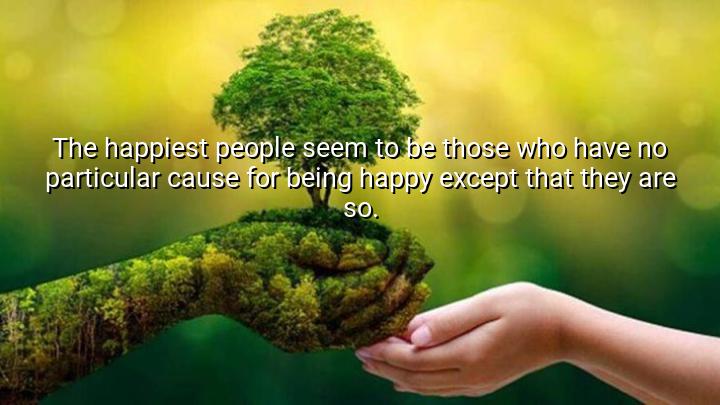




In this quote, William Inge suggests that the happiest people are those who do not rely on external circumstances or specific reasons to feel happy. Instead, their happiness comes from within—simply because they choose to be happy. Inge implies that true happiness is not necessarily tied to achievements, wealth, or success, but rather to an inner contentment and gratitude for life as it is. These individuals are happy because of their attitude, not because of any particular event or outcome.
The idea of having "no particular cause" for happiness points to the concept of mindfulness—the ability to experience joy in the present moment, independent of future goals or past achievements. Inge is highlighting that people who are able to cultivate this kind of inner peace and self-acceptance often find more happiness than those who constantly seek external reasons to be happy.
This perspective challenges the common belief that happiness must be earned or achieved through specific actions or material gains. Instead, it emphasizes that simplicity and being content with what you have can lead to lasting joy. People who embody this mindset often find happiness in the everyday moments, rather than waiting for a big event or milestone to occur.
Ultimately, Inge's quote encourages us to focus on embracing the present and finding joy in being alive, rather than in external achievements. By cultivating a positive, grateful attitude, individuals can experience happiness regardless of their circumstances. It suggests that happiness is more about mindset than external factors.

AAdministratorAdministrator
Welcome, honored guests. Please leave a comment, we will respond soon