

Unnecessary possessions are unnecessary burdens. If you have them, you have to take care of them! There is great freedom in simplicity of living. It is those who have enough but not too much who are the happiest.
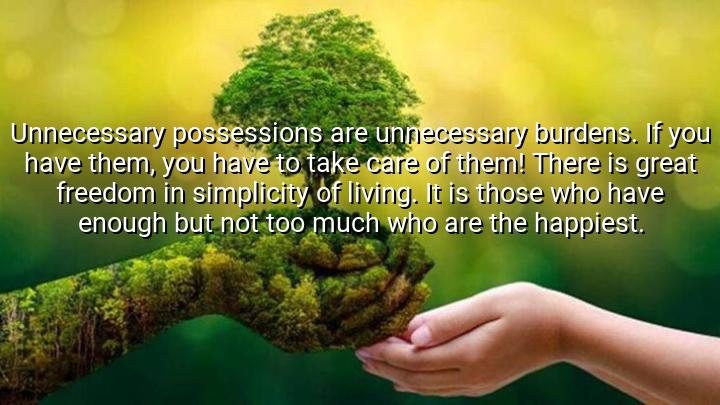




In this quote, Peace Pilgrim emphasizes the idea that unnecessary possessions can become burdens, detracting from one’s sense of freedom and peace. She argues that owning items that are not essential requires effort and responsibility, as they need to be maintained and cared for. These burdens can add stress and distraction, ultimately hindering one’s ability to live a life of simplicity and focus.
The quote speaks to the value of simplicity in living, suggesting that true freedom comes from shedding excess material possessions. Peace Pilgrim suggests that the more one owns, the more one must worry about, care for, and maintain those things. In contrast, by living simply, with only what is necessary, a person can experience a greater sense of freedom and emotional clarity, unencumbered by the weight of excess.
Furthermore, Peace Pilgrim highlights the idea that happiness is found in having "enough but not too much." This reflects a philosophy of contentment and balance, where people find satisfaction not through accumulation but through appreciating what they already have. It’s a reminder that true happiness doesn’t come from material wealth or possessions but from a sense of peace and simplicity in one’s life.
Ultimately, the quote encourages reflection on our relationship with material things and challenges the notion that owning more leads to greater fulfillment. It advocates for a lifestyle where simplicity and contentment are prioritized, and where the pursuit of happiness is not tied to material gain but to the freedom that comes with living a life free of excess.

AAdministratorAdministrator
Welcome, honored guests. Please leave a comment, we will respond soon