

Unless there is recognition that women are most vulnerable... and you do something about social and cultural equality for women, you're never going to defeat this pandemic.
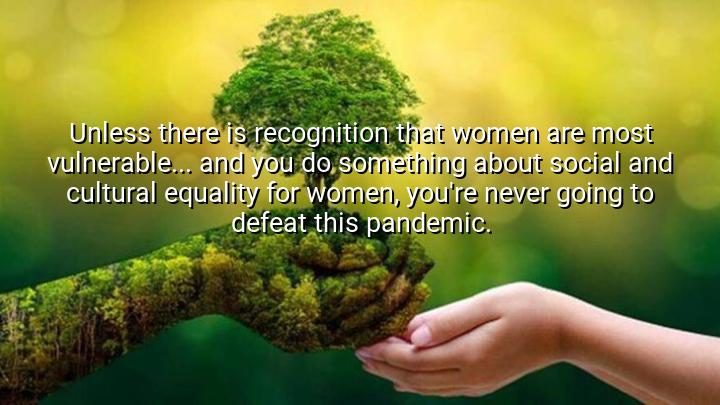




In this quote, Stephen Lewis, a Canadian politician and global health advocate, stresses the importance of recognizing gender inequality as a critical factor in addressing the pandemic, likely referring to the HIV/AIDS crisis, a major issue he has been deeply involved with. Lewis argues that women are particularly vulnerable in the face of global health crises, not only because of biological factors but because of the social and cultural inequalities that disproportionately affect them. Without addressing these systemic issues, efforts to combat such pandemics will fall short.
Lewis emphasizes that the vulnerability of women is compounded by discriminatory practices, such as limited access to education, healthcare, and economic opportunities, as well as entrenched gender roles that restrict their agency and decision-making power. The societal structures that often marginalize women make it harder for them to protect themselves from health threats and reduce their ability to seek treatment or support. He suggests that the failure to recognize and address these factors will ensure that any pandemic remains unresolved or poorly managed.
Moreover, Lewis calls for a broader, holistic approach to health crises, one that doesn't merely focus on medical solutions but also on tackling the social determinants of health, including cultural equality for women. Gender equality is essential not only for improving the lives of women but for the health and prosperity of society as a whole. By empowering women and ensuring they have equal access to resources and opportunities, societies can improve their resilience in the face of health challenges.
Ultimately, Lewis' quote is a call for social justice and a reminder that the fight against pandemics and global health crises cannot succeed without addressing the deep-rooted inequalities that affect women. Achieving gender equality is not just a matter of fairness but a practical necessity for tackling some of the world’s most pressing health and social issues.

AAdministratorAdministrator
Welcome, honored guests. Please leave a comment, we will respond soon