

To resist the frigidity of old age, one must combine the body, the mind, and the heart. And to keep these in parallel vigor one must exercise, study, and love.
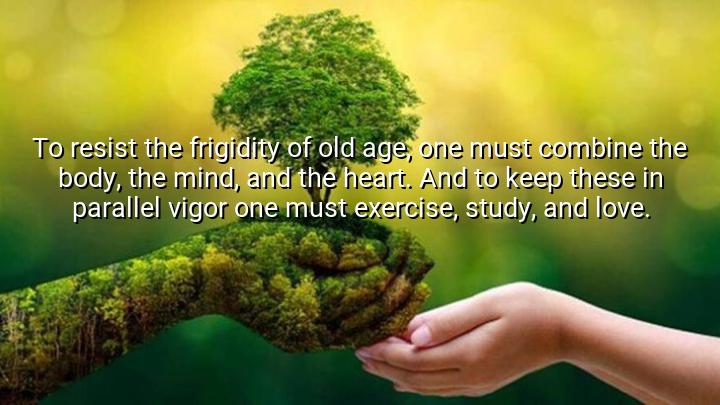




The quote "To resist the frigidity of old age, one must combine the body, the mind, and the heart. And to keep these in parallel vigor one must exercise, study, and love" by Alan Bleasdale emphasizes the idea that aging is not just a physical process but also involves maintaining mental and emotional well-being. Bleasdale, a British screenwriter and playwright, suggests that in order to combat the decline often associated with aging, a person must nurture and balance all aspects of their being—body, mind, and heart—to maintain vitality and energy in later years.
Bleasdale uses the term "frigidity" to describe the emotional and physical coldness or stagnation that can accompany aging. To avoid this sense of decline or stasis, he proposes a holistic approach where exercise, study, and love work together to maintain vigor. Exercise keeps the body healthy and strong, study stimulates the mind, and love keeps the heart full of connection, passion, and purpose. By engaging all three, individuals can resist the isolation and decline that often come with old age.
The quote also implies that aging is not something to be passively accepted, but something that requires active participation in life. Bleasdale advocates for continuous growth and engagement in different aspects of life, suggesting that intellectual and emotional involvement are just as important as physical health. By maintaining a balance of physical activity, intellectual curiosity, and emotional fulfillment, a person can continue to thrive in their later years, rather than simply enduring them.
Ultimately, Bleasdale’s quote serves as a reminder that aging should be seen as a stage of life that can still be filled with vitality, purpose, and joy. It emphasizes the need for an integrated approach to health—not just focusing on the physical, but also nurturing the mental and emotional aspects of life to live fully and resist the emotional coldness that can accompany old age.

DTDuong Thuy
The use of the word 'frigidity' really caught my attention—it’s a strong choice. It suggests that aging without engagement leads to a kind of emotional and physical coldness. Do you think that’s accurate, or a bit dramatic? I like the quote overall, but I also wonder if it might unintentionally stigmatize people who are aging quietly or introspectively. Must vigor always be outwardly active, or can it also be found in stillness and reflection?
MH10CT2-10- Le Nguyen Minh Hien
This is such a well-rounded philosophy, and I wish more people talked about aging this way. Instead of resisting time with surgery or denial, it’s about leaning into vitality with intention. I’m curious, though—do you think this approach works for everyone? Or is it a bit idealized, maybe more accessible to people with certain privileges—like time, health, or education? How can we make this mindset more inclusive?
TCThithu Cao
I really appreciate how this quote emphasizes love as just as important as exercise or intellectual stimulation. That part stood out to me. We don’t always talk about emotional engagement as a necessary part of healthy aging, but maybe we should. Do you think things like friendship, intimacy, and community should be considered healthcare? Because it seems like emotional connection is vital to well-being, especially later in life.
TN28-Pham Thi Nga
This quote is beautiful, but also makes me feel a bit of pressure. Is it realistic to expect someone to maintain strength in body, mind, and heart at all times? Life throws curveballs—illness, grief, financial stress. What if you can’t access love, or you're too tired to keep studying? I think the message is valuable, but it also risks sounding like a formula that could make people feel like they’ve failed at aging.
TSCao Thai Son
What strikes me about this quote is how proactive it is. It doesn’t suggest aging gracefully happens by chance—it takes effort, and not just in the gym. Studying and loving are just as vital. But I do wonder, what happens when one of those areas begins to falter? If someone can no longer exercise, for example, does the whole balance fall apart? Or is it about adapting and redefining 'vigor' at each stage of life?