

To keep the heart unwrinkled, to be hopeful, kindly, cheerful, reverent that is to triumph over old age.
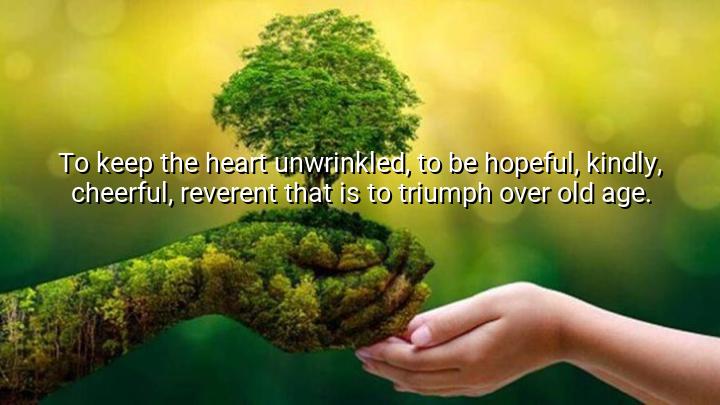




The quote "To keep the heart unwrinkled, to be hopeful, kindly, cheerful, reverent that is to triumph over old age" by Amos Bronson Alcott emphasizes the inner qualities that can help individuals overcome the challenges associated with aging. Alcott, an American educator, philosopher, and social reformer, suggests that the key to aging well lies not in preserving youth physically but in maintaining a positive and gracious attitude throughout life. The idea of keeping the heart unwrinkled symbolizes the importance of preserving a youthful spirit, filled with hope and optimism, even as the body ages.
Alcott’s words highlight the idea that while the physical signs of old age—such as wrinkles or health declines—are inevitable, they do not define a person’s experience of aging. Instead, what truly matters is how one approaches life with a kindly and cheerful disposition. By remaining reverent and hopeful, individuals can maintain a sense of purpose and joy, avoiding the negative effects of bitterness or despair that often accompany the aging process. This mental and emotional resilience is presented as the true triumph over old age.
The quote also suggests that aging is not merely about physical decline, but rather about maintaining personal integrity and emotional balance as time passes. Alcott implies that spiritual maturity—embracing kindness, reverence, and cheerfulness—can help individuals navigate the challenges of aging with dignity and grace. In this way, triumphing over old age is about how we live our later years, with an emphasis on inner strength and positivity.
Ultimately, Alcott’s quote encourages a shift in how we view aging—not as something to fear or resist, but as a stage of life that can be lived fully and meaningfully if we nurture the heart and mind. It speaks to the power of maintaining a joyful and gracious attitude, showing that true fulfillment in old age comes not from physical youth but from an enduring spirit of optimism and kindness.

HLlo hoang lo
I find this quote inspiring and poetic. It emphasizes that old age doesn’t have to be something to dread if we focus on virtues that nourish the soul. But is this perspective universally accessible? Some people might feel excluded if they're struggling emotionally or mentally. How do we help others keep their hearts 'unwrinkled'? Is it more of a communal effort than a personal triumph?
GLTran Gia Lac
The sentiment here is undeniably beautiful. I agree that kindness and hope can rejuvenate the spirit, but what about those who age alone or face economic hardship? Can we still expect them to feel triumphant just by holding onto good values? Maybe this quote is more aspirational than practical—but even so, it's a comforting notion that character can be more powerful than years.
HTHoang thai
This really struck a chord with me. It makes me think that growing older doesn’t have to be synonymous with growing bitter. But what happens when people don’t feel hopeful or reverent because life hasn’t been kind to them? Is this quote suggesting that attitude is everything, or does it overlook external hardships? I'm curious how much agency we truly have in maintaining this youthful spirit of the heart.
BDBall Dragon
It’s fascinating how this quote links emotional resilience to defying the effects of aging. But I wonder—can someone maintain cheerfulness and reverence even while dealing with grief, illness, or loneliness in later life? Is this philosophy empowering or does it unintentionally place pressure on older people to mask their struggles with positivity? I think it’s worth exploring whether this standard is sustainable or even fair.
PTPhuong Thao
This quote feels like a heartfelt reminder that aging isn't just a physical process—it’s also deeply emotional and spiritual. I love the idea of 'keeping the heart unwrinkled,' but how do we do that in practice when life throws so many challenges our way? Is it realistic to always stay hopeful and cheerful, or is that an idealized version of aging? What role do our communities play in supporting this mindset?