

To enjoy freedom we have to control ourselves.
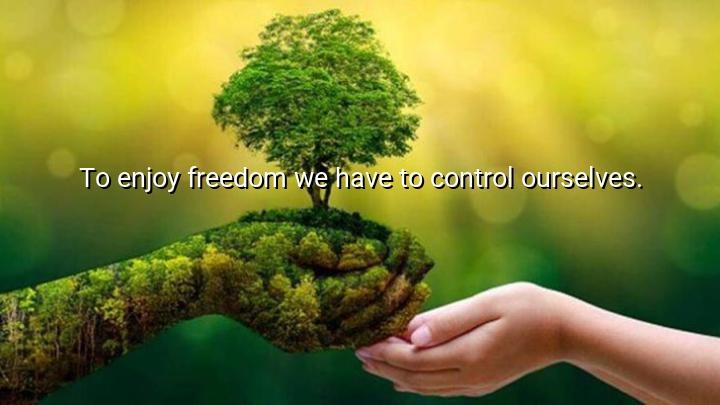




The quote by Virginia Woolf, "To enjoy freedom we have to control ourselves," suggests that true freedom is not just about being free from external restrictions but also about having mastery over one's own impulses and desires. Woolf implies that freedom, in its fullest sense, requires discipline and self-control. Rather than seeing freedom as a state of limitless action or lack of constraints, she views it as something that must be balanced by the ability to govern one's own behavior and choices.
This idea aligns with Woolf's broader literary and philosophical views on personal autonomy and the complexities of human nature. For her, self-control is not a limitation but a means of ensuring that we can responsibly exercise our freedoms. Without it, freedom may lead to chaos or harm, as unrestrained desires could cloud judgment or lead to actions that are not in our best interest. Thus, self-mastery becomes an essential part of what it means to be truly free.
Woolf’s quote also touches upon the internal struggles that come with the pursuit of personal freedom. While external forces—such as societal norms or laws—may limit us, the true challenge lies in managing our own impulses, emotions, and actions. This internal control allows us to navigate the world with purpose and integrity, ensuring that our exercise of freedom aligns with our values and goals.
Ultimately, Virginia Woolf advocates for a more reflective and disciplined approach to freedom, where self-control serves as the foundation for meaningful and responsible action. In her view, freedom is not a wild, unchecked force, but a deliberate and thoughtful practice that empowers us to live authentically while respecting both ourselves and others.

AAdministratorAdministrator
Welcome, honored guests. Please leave a comment, we will respond soon