

Those who have no hope pass their old age shrouded with an inward gloom.
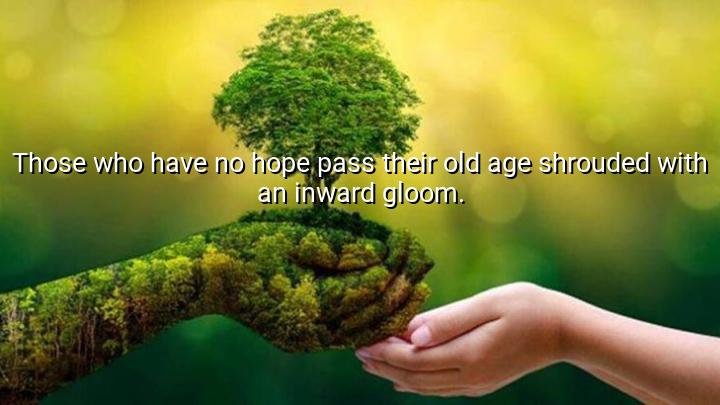




Wilfred Owen’s quote, "Those who have no hope pass their old age shrouded with an inward gloom," reflects the emotional and psychological toll that the absence of hope can have on individuals as they age. Owen, a renowned poet and soldier, often explored the themes of suffering and the human condition, particularly in the context of war. In this quote, he suggests that without the sustaining force of hope, the later years of life can become filled with despair, leading to a gloom that permeates a person’s inner world.
The reference to old age indicates that, as people grow older, they may begin to reflect on their lives and face the realities of mortality. Without the motivation or optimism that hope provides, old age can feel like a burden, marked by feelings of emptiness or a lack of purpose. Owen’s insight into the psychological state of aging underscores how critical hope is for maintaining emotional well-being, especially as people face the physical and emotional challenges of growing older.
Wilfred Owen, best known for his poetry during World War I, often captured the traumatic experiences of soldiers and the brutal realities of war. His works reflect his deep concern for the human psyche, especially the psychological scars left by trauma and grief. This quote, while focusing on old age, echoes Owen’s broader themes of mental anguish and the inner suffering caused by a lack of hope or purpose in life. His reflections on human vulnerability provide a powerful understanding of the emotional state of those who feel disconnected from any sense of future possibility.
In essence, Owen’s quote speaks to the universal need for hope and meaning in life, particularly as one enters old age. It suggests that, without these elements, individuals may experience a profound sense of gloom and emotional isolation. Hope, for Owen, is not only a source of strength but also a crucial component in ensuring that the later stages of life remain rich with purpose and inner peace, rather than marked by despair.

BDPhung Bach Diep
I think this quote is a quiet warning. It’s not aging itself that’s tragic—it’s aging without hope. Owen, having seen the horrors of war, probably understood the weight of despair more deeply than most. But even outside that context, it speaks to the universal need for meaning. How do we ensure our older years are not filled with gloom? Is it about community, purpose, creativity—or just holding onto a little bit of wonder?
TLThao Le
Reading this, I feel a bit of fear. What if one day I lose the things that give me hope? It’s sobering to realize that aging without hope can lead to internal darkness, not just physical decline. I wonder—can we prepare emotionally for old age the way we do financially? Maybe cultivating hope is a lifelong habit, one that becomes more vital as we grow older and face the unknown.
TTthanh truc
This quote makes me reflect on the emotional and psychological landscape of aging. Is the presence or absence of hope more a reflection of individual mindset, or does it stem from how society treats its elders? Maybe it’s both. I think it raises a deep question—how do we sustain hope when dreams shrink and losses accumulate? It seems like a challenge not just of old age, but of the human spirit itself.
TTThuy Thanh
Owen’s observation is painfully beautiful. It reminds me of how often older people are ignored or forgotten, which may lead to that 'inward gloom' he describes. If hope keeps us going, then maybe society has a duty to ensure people of all ages have reasons to stay engaged and feel valued. Shouldn’t we focus more on helping seniors find joy and meaning, instead of just managing their decline?
DLNguyen Dang Long
This quote feels hauntingly true. It makes me think about how essential hope is—not just in youth, but especially in old age. Without something to look forward to or believe in, life can feel like a long, slow fade. But what forms can hope take later in life? Is it connection, purpose, faith, or simply routine? I wonder how we can nurture and protect hope as we age, even when the body and world change.