

There's no such thing as old age, there is only sorrow.
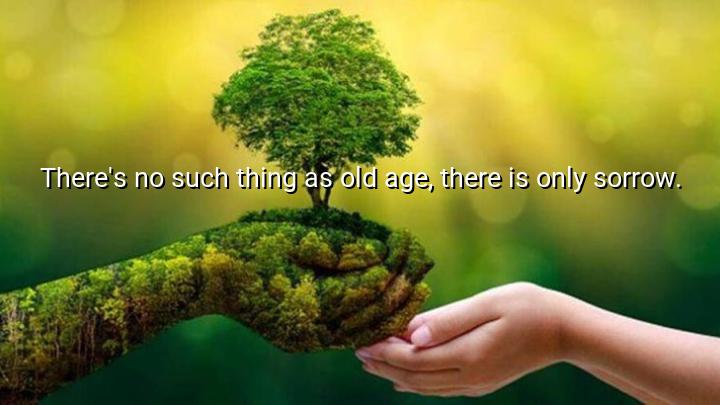




In this quote, Fay Weldon presents a rather pessimistic view of old age, suggesting that rather than being a natural and inevitable stage of life, old age is defined by sorrow. Weldon’s assertion that “there's no such thing as old age” challenges conventional thinking, implying that aging is not an inherent process but something that is laden with emotional pain and loss. The term sorrow in this context refers to the grief, regret, and emotional weight that can come with getting older, such as health issues, the loss of loved ones, or the diminishing of physical and mental abilities.
Weldon’s perspective could be seen as a reflection on how society often associates old age with decline, viewing it through a lens of sadness or inevitability. Instead of seeing aging as a time of wisdom, reflection, or peace, she emphasizes the negative emotional aspects, like loneliness or the feeling of being disconnected from a society that often marginalizes the elderly. This reflects the darker side of aging, where the body and mind deteriorate, and the promise of new beginnings or adventures becomes harder to achieve.
By claiming that old age is not a distinct phase but simply sorrow, Weldon also critiques the way we conceptualize aging in our culture. Her quote might be suggesting that the focus on the physical aspects of getting older overshadows the complex emotional reality of growing old. The mental and emotional toll of old age—such as loss of independence or memories—often becomes more prominent than the natural changes in the body.
Ultimately, Weldon’s quote brings attention to the painful truths of aging, challenging us to confront the emotional realities of getting older. While her view is more somber, it offers an opportunity to reflect on how society, and individuals, approach aging and how we can reframe our perceptions of it. Instead of focusing solely on the sorrow of old age, we might begin to appreciate the depth of experience and wisdom that can come with it, even if it’s mixed with emotional hardship.

APAnh Phuong
I read this and immediately thought about how different people experience aging so differently. Yes, sorrow can be part of the journey, especially with loss or illness. But to say that’s all there is—doesn’t that overlook resilience, humor, and even love in later years? I wonder if this quote reflects more of a personal sadness or a societal failure to support the aging population. Can we imagine a version of aging that’s rich rather than tragic?
HLHien Le
Fay Weldon’s words feel bleak, but perhaps intentionally so—maybe to provoke us into rethinking how we view aging. It raises a question: do we equate old age with sorrow because of physical decline and loneliness, or is it the emotional toll of regrets and unfulfilled dreams? What about those who age surrounded by love and purpose—are they the exception? Is sorrow an inevitability or something we can counter with connection and care?
OOO O
This quote stopped me in my tracks. It makes me question whether our perceptions of aging are shaped more by cultural attitudes than actual experience. Is it sorrowful because we’ve created a society that isolates the elderly, or because of the intrinsic realities of time and mortality? I’d love a deeper exploration of whether aging has to be defined by loss—or if it can be reclaimed as a powerful, meaningful chapter.
DHdinger heimer
I can’t help but feel conflicted about this quote. On one hand, I understand that aging can bring loss—of people, health, opportunities. But on the other, is it fair to equate the entire experience with sorrow? Isn’t there room for wisdom, peace, or even rebirth in older age? I’d love to hear from someone who found unexpected joy in growing older. Is sorrow really the dominant emotion of aging?
TNthu NGUYEN
This quote feels heavy and honestly a little heartbreaking. Is Weldon suggesting that aging itself is synonymous with grief and decline? I wonder if that’s a personal reflection or a broader commentary on how society treats the elderly. Shouldn’t we be working toward redefining aging as something meaningful, perhaps even liberating? I’d love to hear perspectives that challenge this view with stories of joy and fulfillment in later life.