

There is no loneliness greater than the loneliness of a failure. The failure is a stranger in his own house.
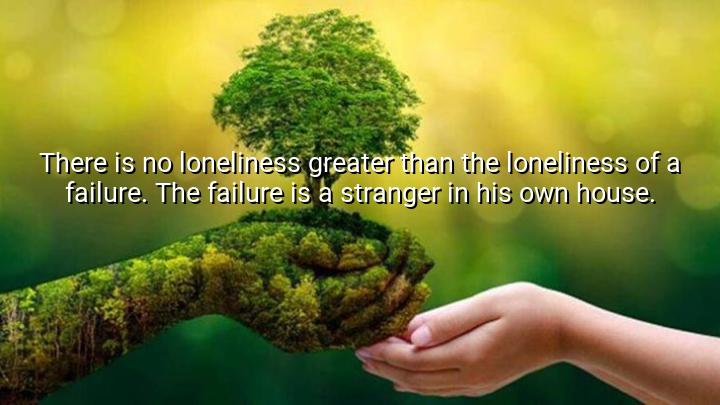




The quote by Eric Hoffer, "There is no loneliness greater than the loneliness of a failure. The failure is a stranger in his own house," speaks to the isolation and alienation that can accompany failure. Hoffer suggests that failure brings a deep sense of disconnection, not just from the world around you, but from yourself. A person who has failed may feel like an outsider in their own life, disconnected from their past achievements, identity, and even their sense of belonging within their own environment. The loneliness of failure is heightened by the feeling that the world, and sometimes even the self, no longer recognizes or values the individual.
Hoffer’s words convey that failure can strip someone of their sense of identity and purpose. When someone experiences failure, especially in something they deeply care about, they may feel as if they have lost their place in the world. This profound loneliness comes from the fear that their worth is defined solely by success, leaving them feeling like a stranger in their own life. The quote touches on the emotional and psychological burden of failure, especially when it is internalized and shapes how one sees themselves and their relationship to others.
The origin of this quote stems from Hoffer’s work as a social philosopher and author, particularly in his influential book The True Believer. Hoffer was known for his insights into human behavior, society, and individual identity. In his writings, he explored the psychological effects of personal and social failure, and this quote reflects his belief in the profound emotional toll that failure can take on individuals, especially in societies where success is highly valued.
Ultimately, Hoffer’s quote serves as a stark reminder of the emotional consequences of failure. It points to the psychological and social isolation that can occur when someone feels disconnected from their own life or sense of self. The failure, in this sense, is not just an event, but a deep internal struggle that challenges how one views themselves and their place in the world.

AAdministratorAdministrator
Welcome, honored guests. Please leave a comment, we will respond soon